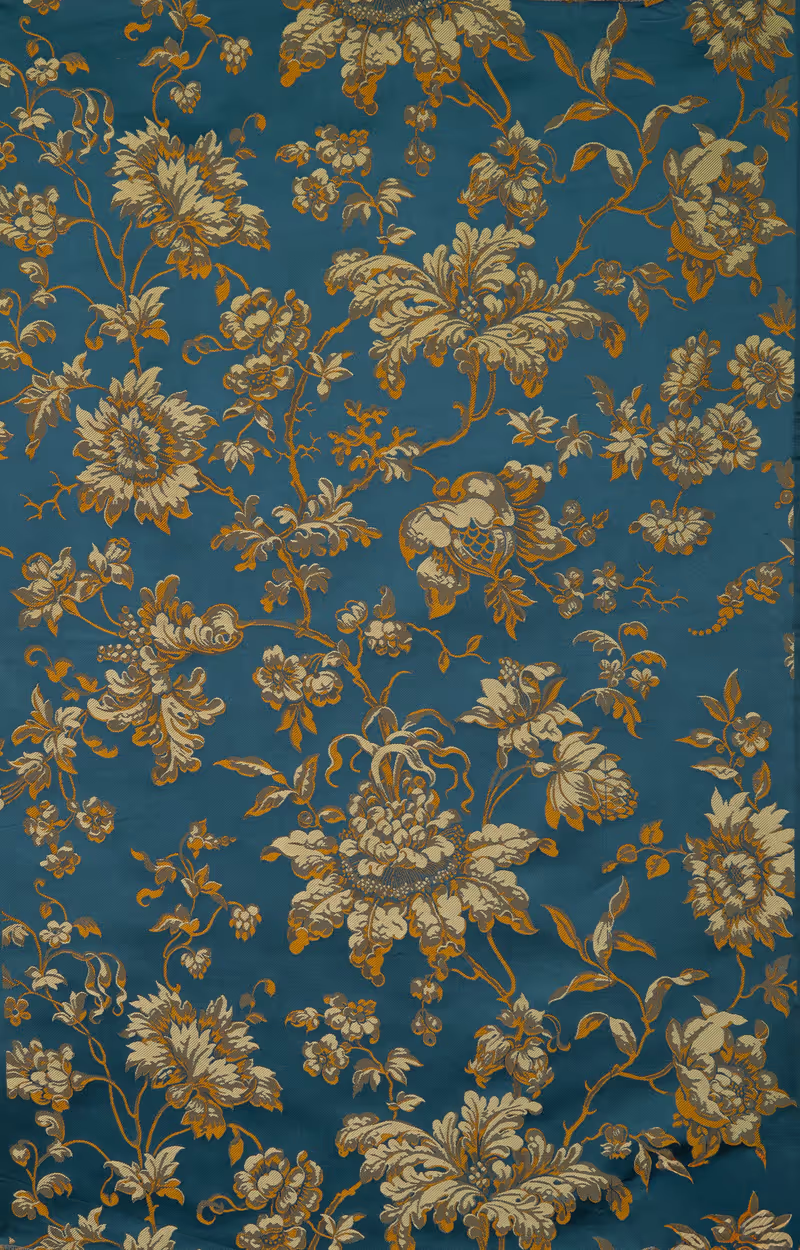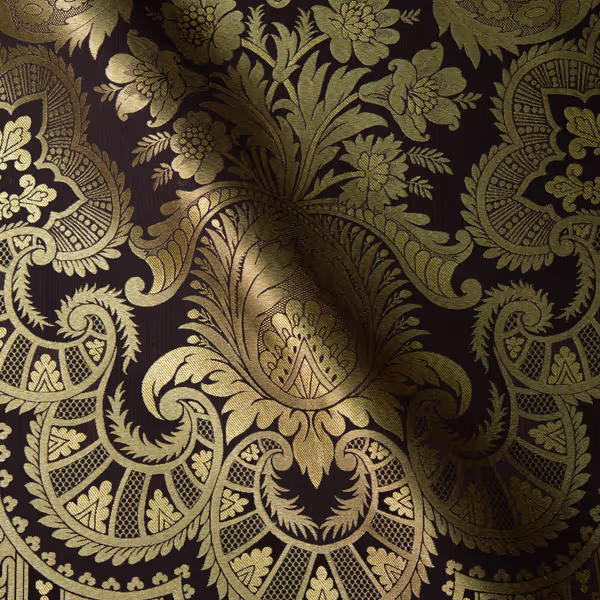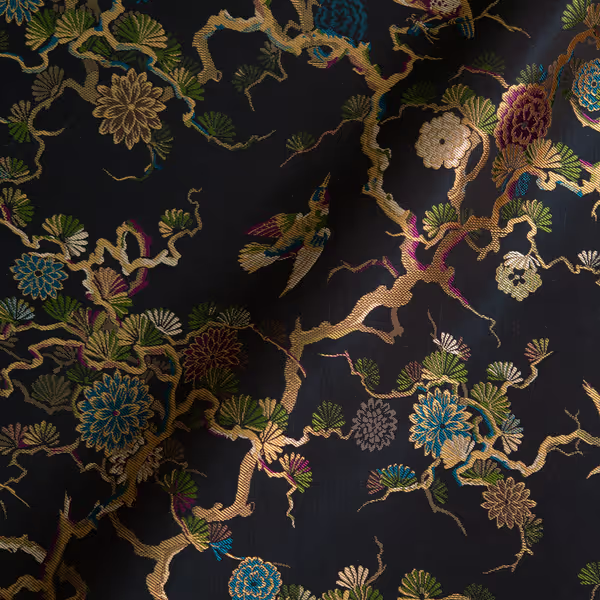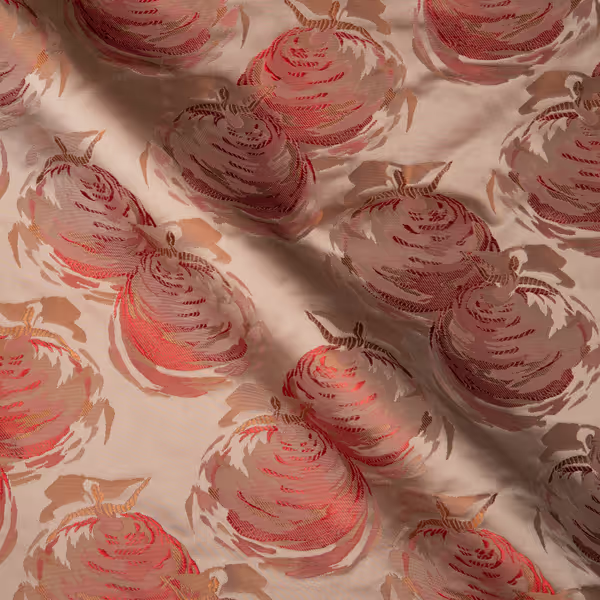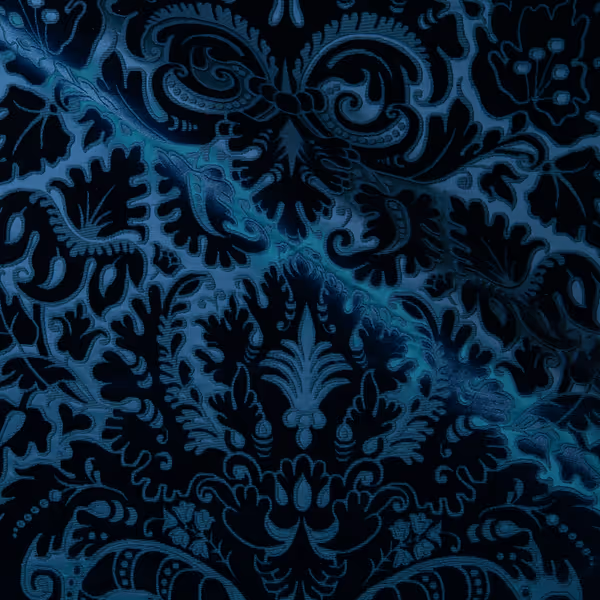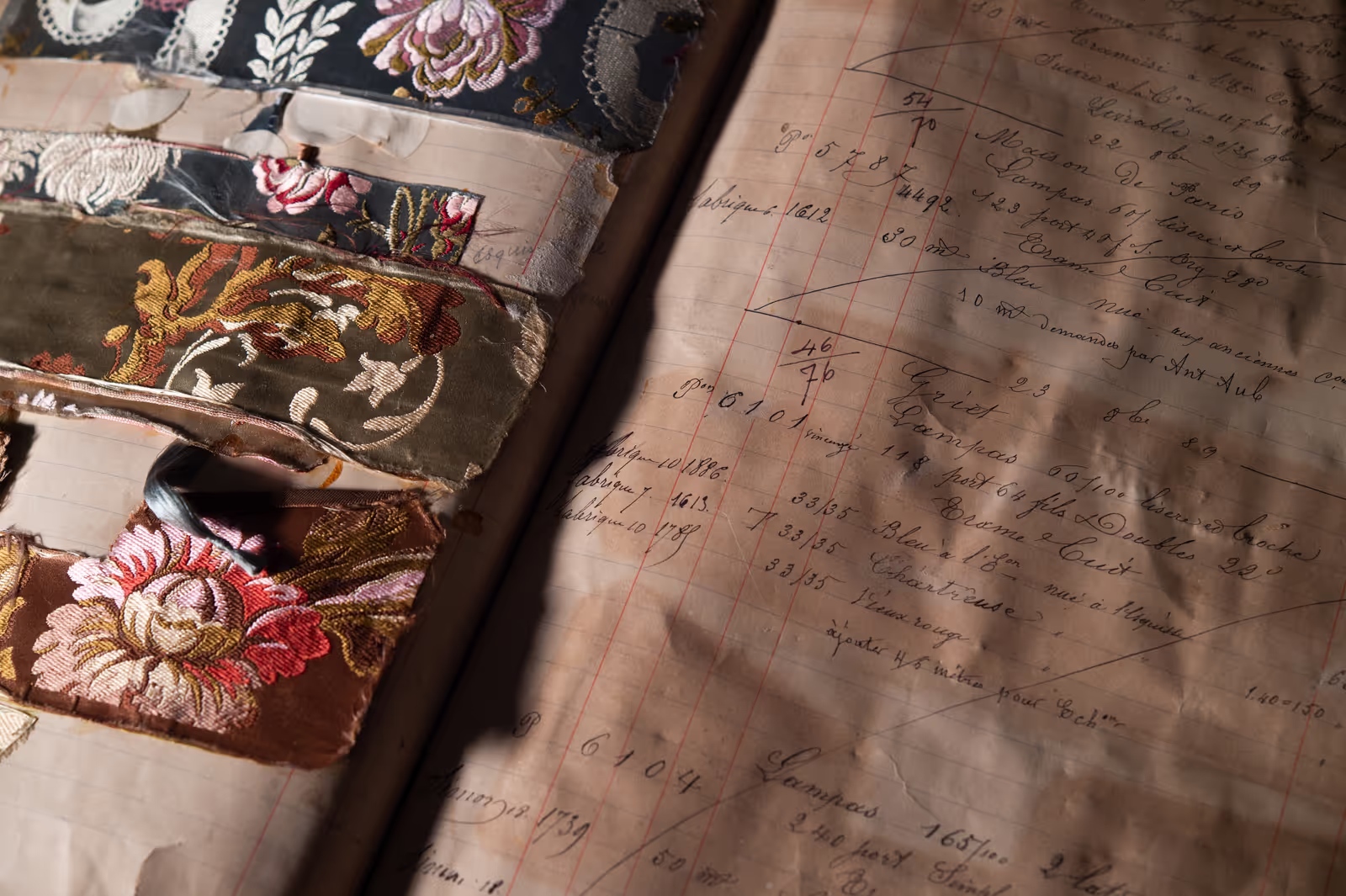
Soierie aux motifs hexagonaux bleu et cuivre, reflets changeants
TODO: remplacer image placeholder
Prelle craftsmanship

Between creativity and artisanal mastery, an incomparable Prelle signature
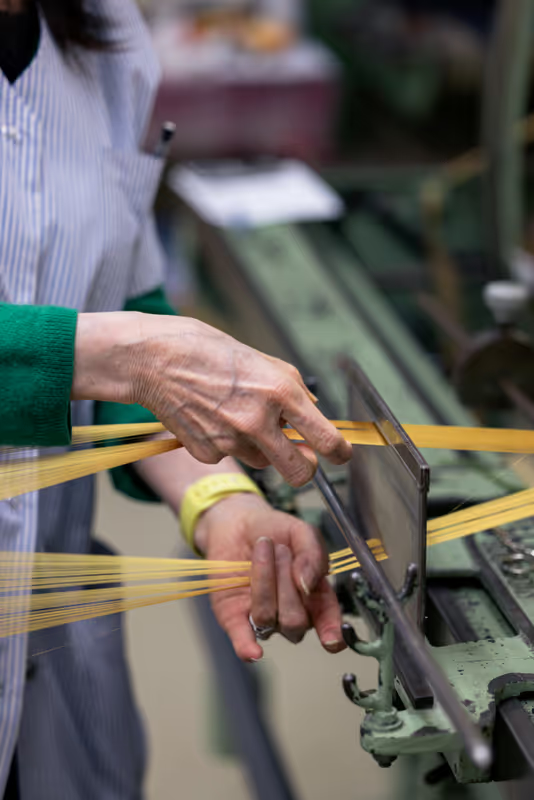
Hands guiding golden silk threads through a weaving machine

Since 1752

A family business for 9 generations, with ancestral expertise.

Prelle is one of the oldest Lyon manufacturers of furnishing fabrics today, and the only one that has remained a family business and continues to create and produce exclusively in France. It is the partnership of two families, Prelle and Verzier, both long-standing Canuts, that has allowed the traditional craft of silk working in Lyon to endure.
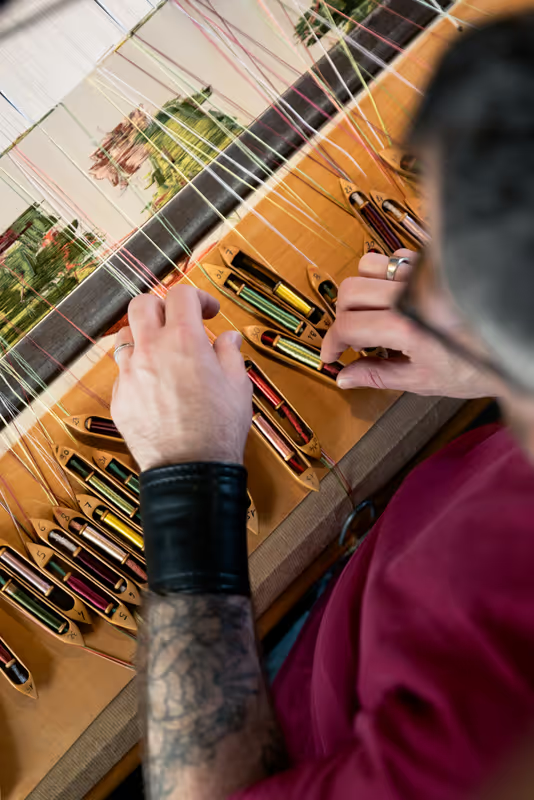
Craftsman's hands handling colorful shuttles on a hand loom

It is through numerous technical advances and the design of loom prototypes that the Prelle Manufacture continues to evolve over the years.

Our techniques
Jacquard
Weave
Taffeta
Gros de Tours
Satin
Damask
Brocatelle
Brocade
Lampas
Figured Satin
Ciselé Velvet
Silk Velvet
Warp Printing
Spotlight on

Our techniques

Jacquard

Jacquard

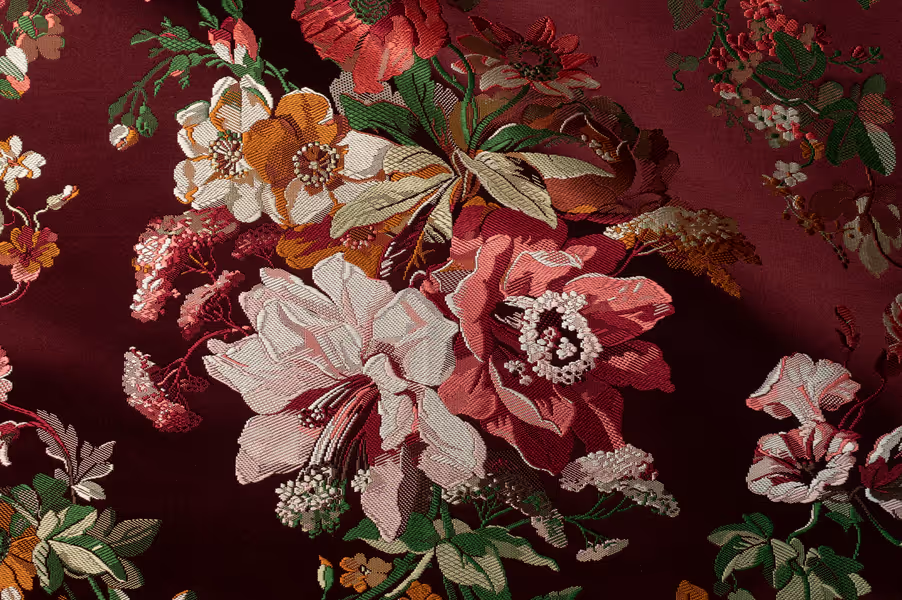
Jacquard refers to any fabric whose patterns are formed by the interlacing of dyed threads—warp threads and weft threads—creating a figured fabric. It takes its name from the aggregation of inventions by Joseph-Marie Jacquard of the programmable mechanical loom in the early 19th century, building upon the work of his predecessors Vaucanson, Bouchon, and Falcon, perfected by Jean-Antoine Breton to become fully functional.

Patterns are formed throughout the weaving process through the manner of interlacing threads and creating different weaves: satin, taffeta, plain weave. This technique offers infinite freedom in combining materials, processes, and colors, bringing to life furnishing fabrics of unparalleled quality, from the most classical to the most contemporary.

Weave

Weave

The weave refers to the manner in which warp and weft threads interlace to form a fabric. The three fundamental weaves—plain, twill, satin—give the fabric specific properties in terms of texture, strength, appearance, and drape. It is the structural foundation of all weaving, determining the appearance and qualities of the finished fabric.

Taffeta

Taffeta

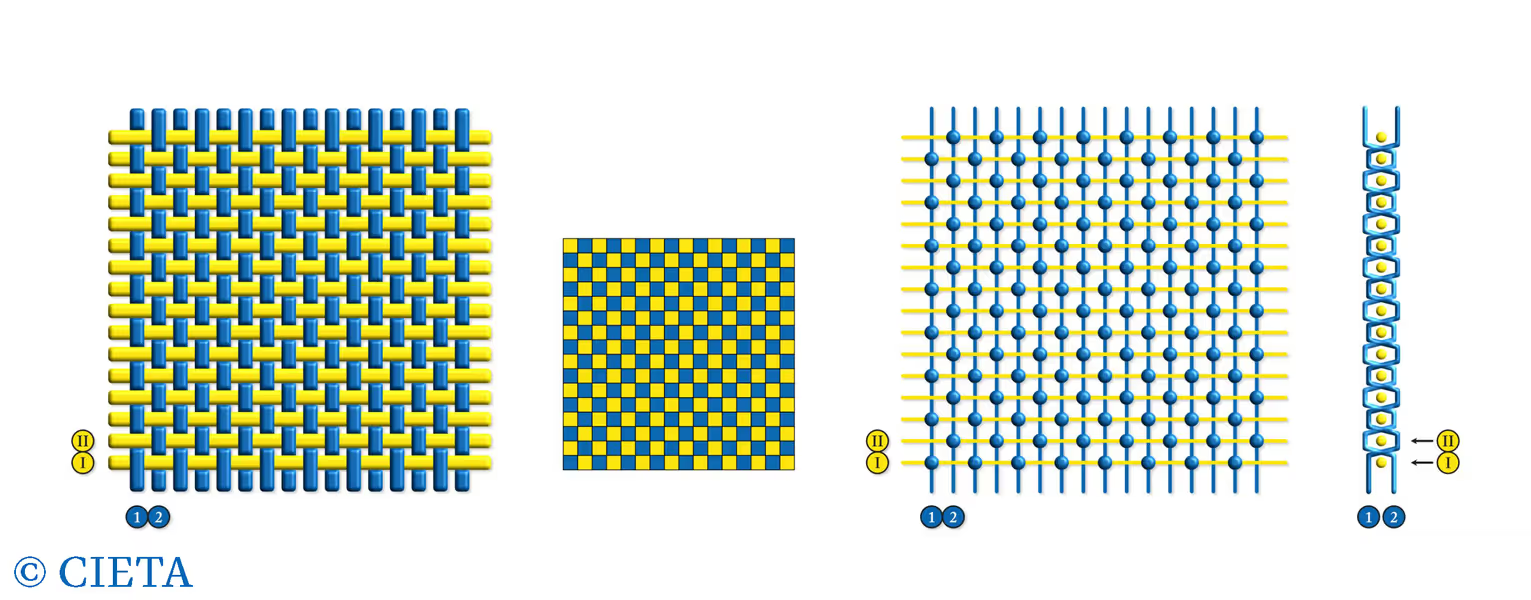
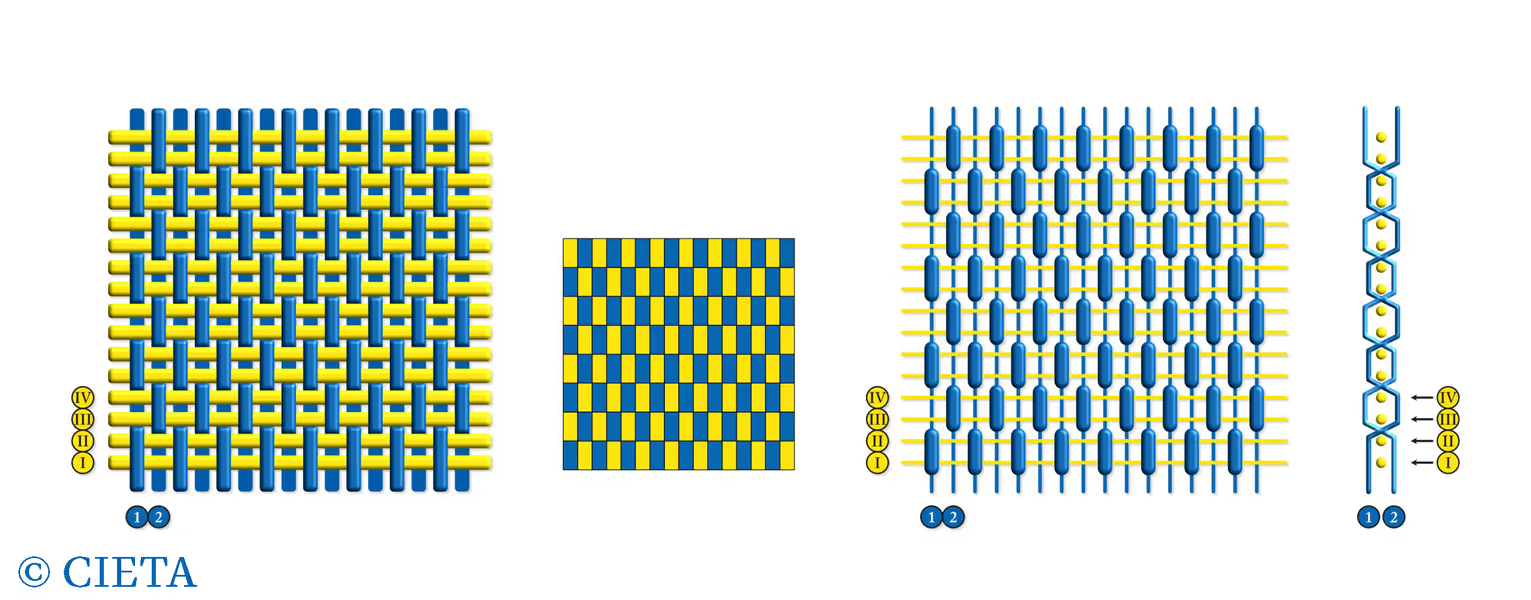
Taffeta is a plain weave, the simplest and most widespread, where warp and weft threads interlace perpendicularly, with a weft thread passing alternately over then under a warp thread. This tight weave gives the fabric a matte appearance, less lustrous than satin weaves.

Silk taffeta is characterized by dense, plain weaving, a slightly thicker weft, and produces a distinctive rustling sound when creased. Often used as lining for curtains, it provides structure and sophistication while maintaining lightness and fluidity. Different types of taffeta exist, such as fifteen-sixteen taffeta, derived from plain fabrics such as faille or louisine.

Gros de Tours

Gros de Tours

Gros de Tours resembles taffeta but with a doubled weft. Also called two-shot ribbed, it produces a fabric slightly thicker and more resistant than taffeta, characterized by visible horizontal ribs.

This plain fabric lends itself to various treatments: moiré, embroidery, or painting. Used for wall hangings and under-curtains, it combines body and elegance.

Satin

Satin

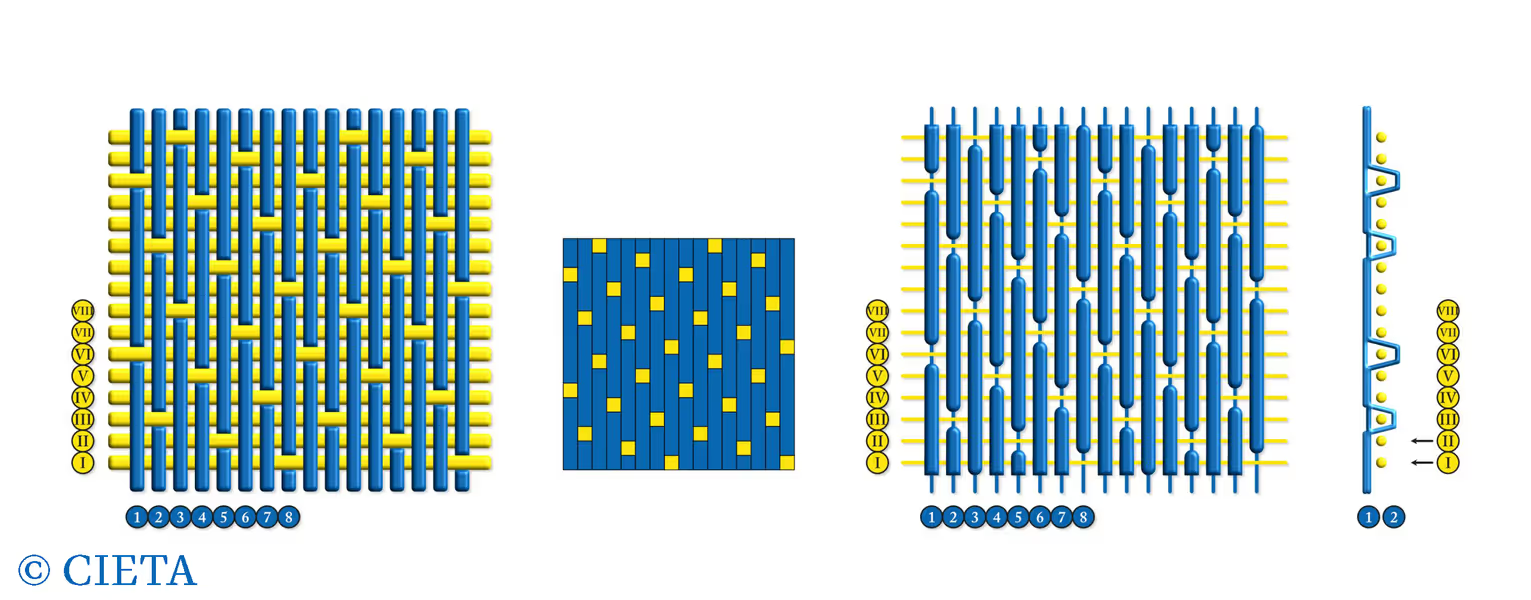
Satin is a specific weave where weft threads form long floats over warp threads, thus creating a smooth, lustrous surface on which light reflects. Satin-weave fabrics are notably more luminous than taffeta, whose tight weave interrupts the surface and produces a matte appearance.

Satin can be formed by either weft or warp. The satin length—the length of the float created by the weft (5-end satin, 8-end satin, 16-end satin, etc.)—has a direct impact on the fabric’s luster and use. A 16-end satin is better suited to curtains than upholstery. Satin being a thread interlacing method, it can be produced in different materials, offering fluid drape and characteristic sheen.

Damask

Damask

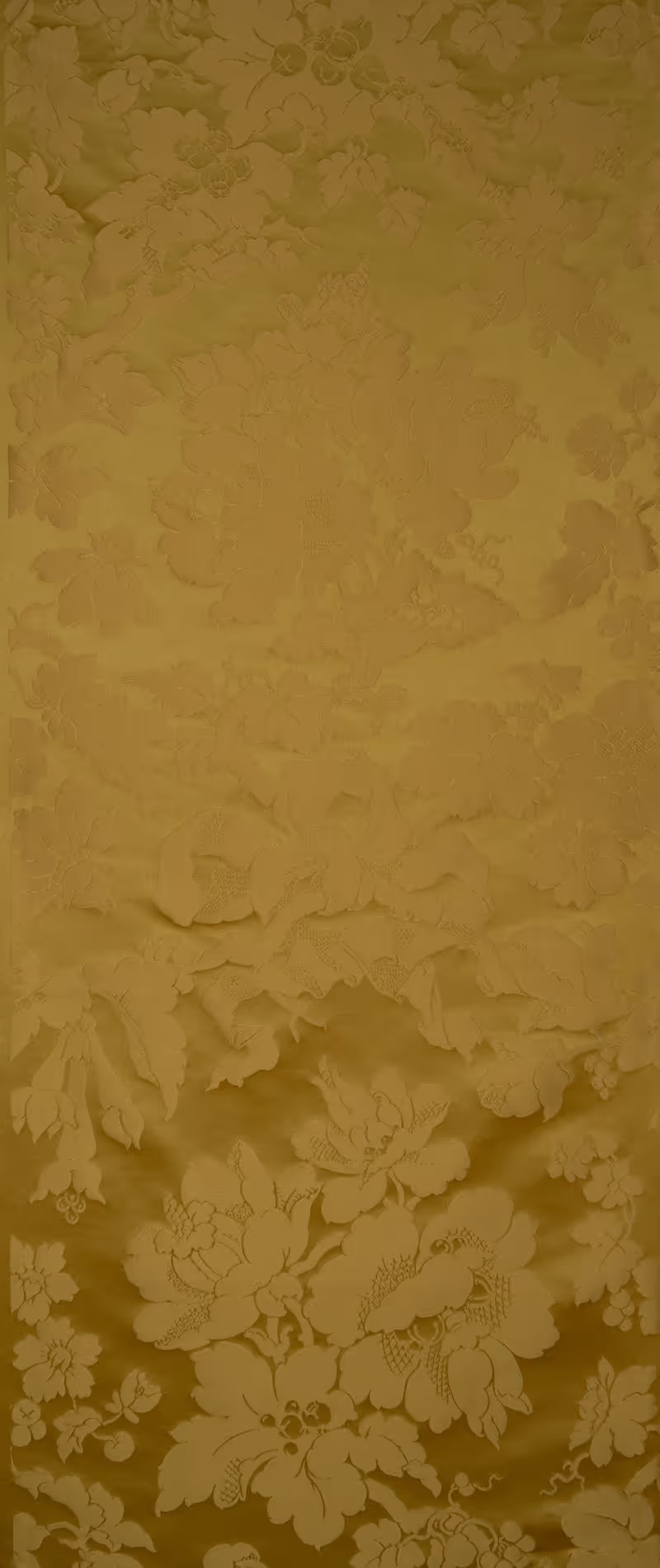
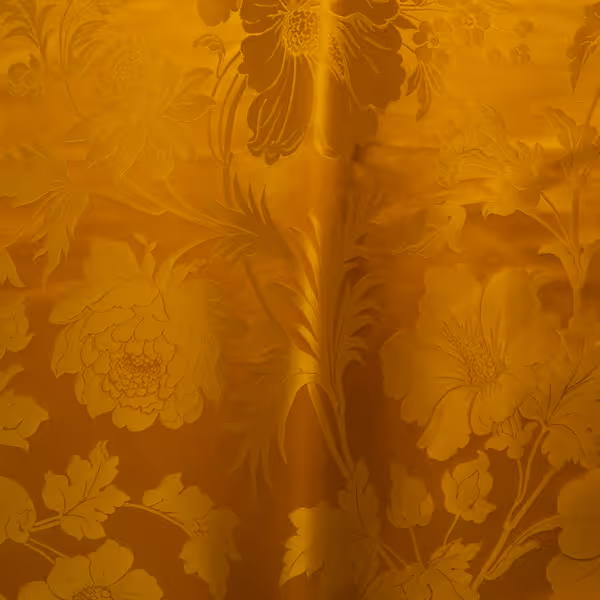
Reversible figured fabric woven with a single warp and single weft, where the pattern reveals itself through the contrast of luster between ground and design. The alternation of satin weaves creates subtle light effects on a monochrome or two-tone surface.

Used for wall hangings, curtains, and upholstery, damask offers refined, timeless elegance through its changing reflections.

Brocatelle

Brocatelle

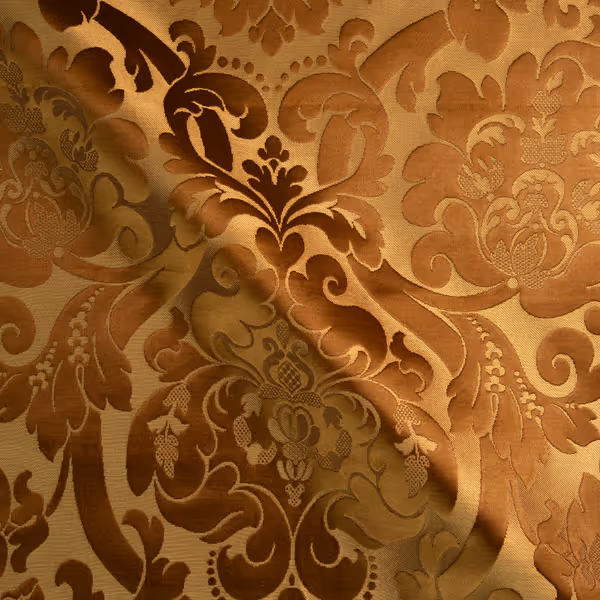
Brocatelle is a figured fabric with two warps: the first forms a characteristic raised pattern, the second binds the threads at the back. The design, typically executed in silk warp, stands out against a ground woven with a thicker linen weft, producing a particularly sought-after relief effect.

Its rich, generous texture, combined with its thickness and density, makes it a prestige fabric ideal for wall hangings and curtains, with strong insulating properties.

Brocade

Brocade

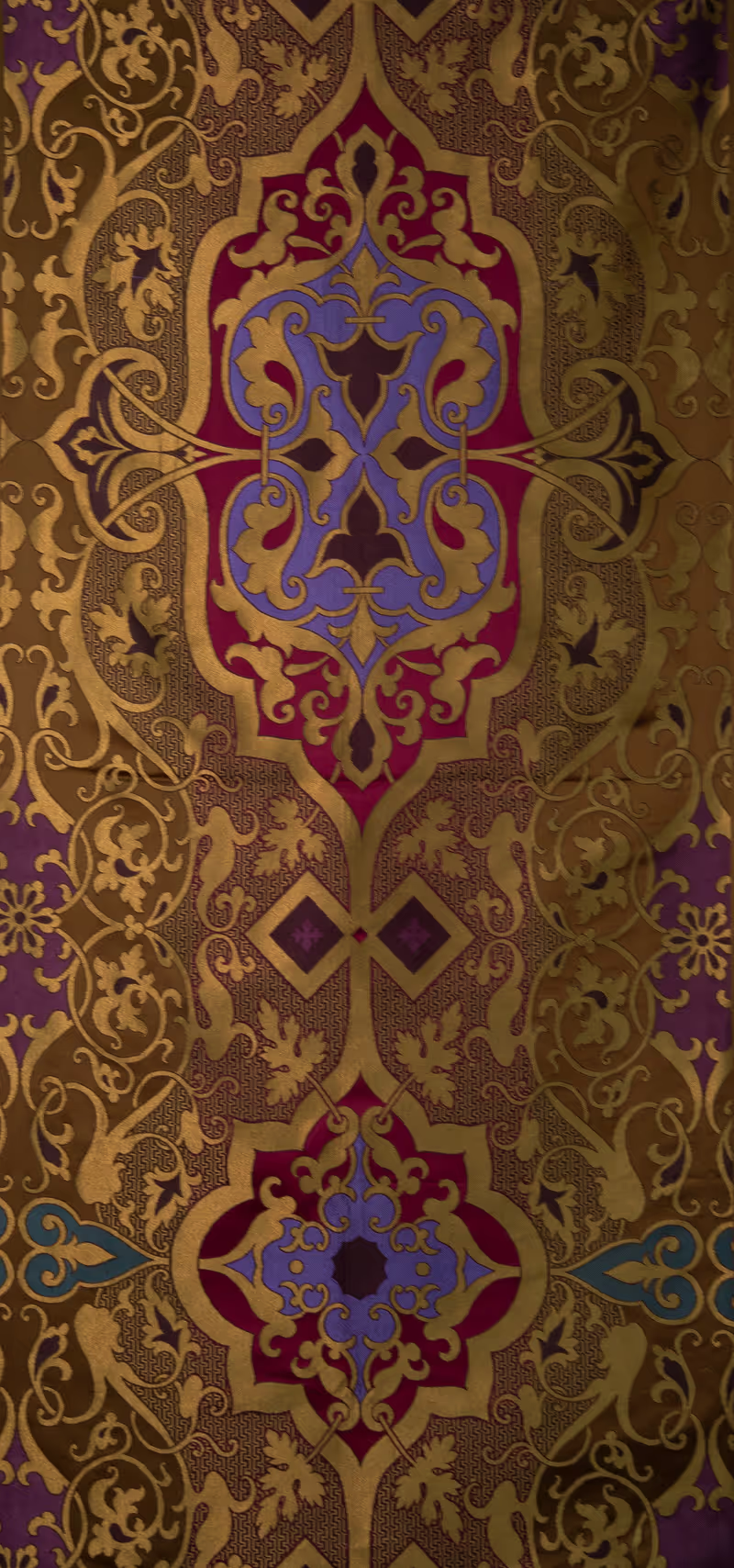
A fabric is qualified as brocade when metallic threads—half-fine gold, half-fine silver, or metal thread—are used in the weft. These intrinsically precious fabrics through their use of gold or silver threads have been employed for centuries in prestige commissions, liturgical or destined for royal courts. Brocades embody luxury and artisanal tradition.

Lampas

Lampas

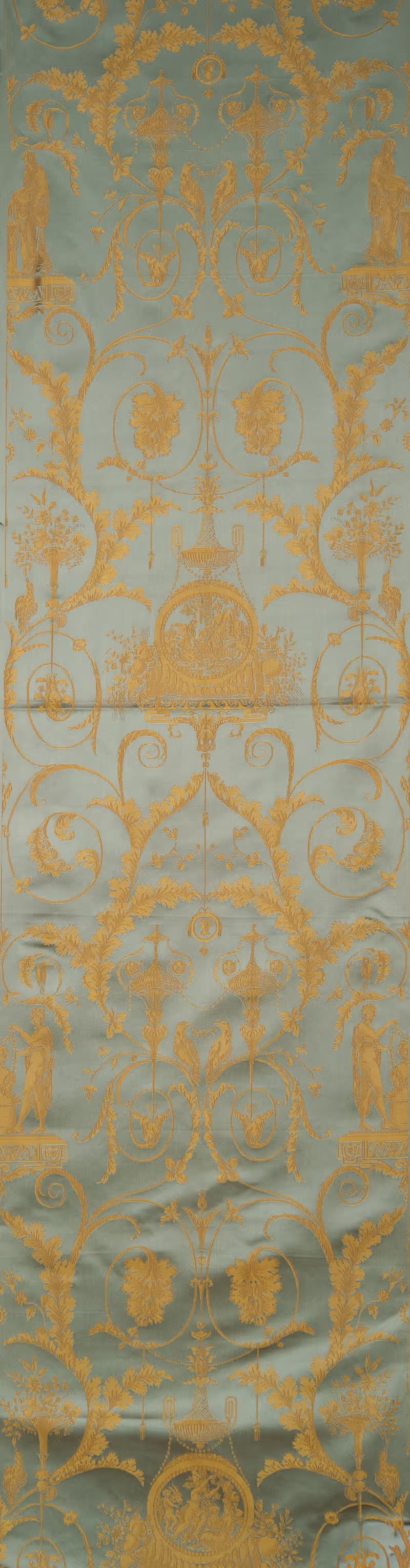
Lampas is a sophisticated weaving where multiple layers of warp and weft threads interlace to form raised patterns and color effects. Destined for prestigious furnishing projects, its richness and chromatic diversity enable the creation of sumptuous designs, in the tradition of designers Philippe de Lasalle or Jean Revel.

These exceptional fabrics are characterized by a high density of silk threads, guaranteeing color purity and longevity. Lampas sometimes incorporate up to three warps to create singular effects such as ribbed grounds or pile warp effects. Unlike damask, lampas is not reversible and uses two different weaves—typically a satin ground and wefts bound in taffeta or twill by a binding warp. A lampas woven on mechanical looms can incorporate up to twenty colors for the most exceptional designs.

Figured Satin

Figured Satin

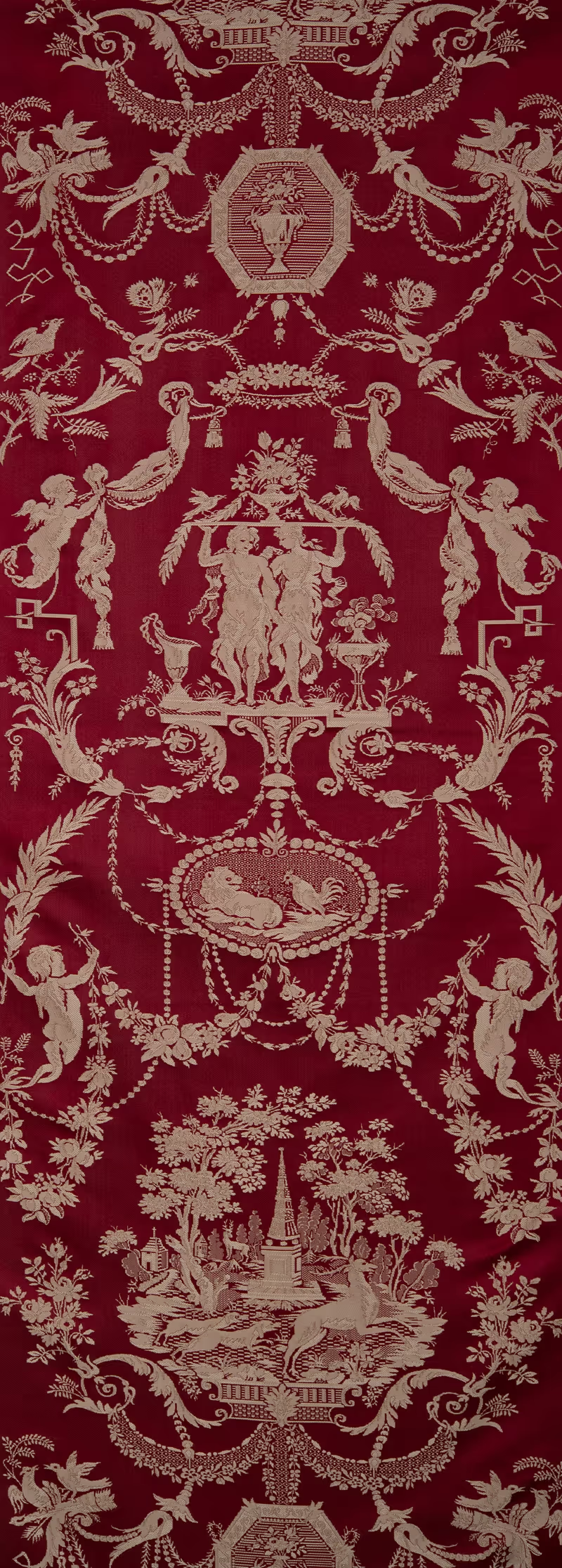
Figured satin is a fabric whose ground is in satin weave, with patterns created by interlacing with weft threads. Unlike lampas, figured satins have only one warp, and the colors that appear result from a subtle balance between warp and weft threads.

Figured satins are available in both classical and contemporary styles, for wall hangings, curtains, and upholstery.

Ciselé Velvet

Ciselé Velvet

Ciselé velvet is a figured velvet where two effects overlap: threads forming loops and cut threads forming a pile, thus creating raised patterns. The ground can be executed in satin or taffeta. True ciselé velvet is 100% silk.

This weaving, entirely executed on 19th-century hand looms, is of extreme preciousness: an experienced weaver can produce up to 30 centimeters per day. Ciselé velvets rank among the most prestigious fabrics.

Different categories exist: multi-height ciselé velvets, multi-color warp velvets, or brocade ciselé velvets enriched with gold and silver threads. They are traditionally found in royal commissions, as wall hangings, curtains, or upholstery.

Silk Velvet

Silk Velvet

Silk velvet is traditionally woven using the double-cloth velvet technique. On a loom custom-designed for our manufacture, two silk fabrics are woven simultaneously in superposition. Between these two layers, a silk pile warp travels back and forth to connect them.

During weaving, a cutting blade passes between the two fabrics and cuts this connecting warp, producing two identical pieces of silk velvet, each with its characteristic velvety surface. The cut threads form the upright pile that gives velvet its softness and luxurious appearance. This method guarantees production efficiency while ensuring pile regularity.

Both pile and ground are entirely in natural silk. Our silk and wool velvet incorporates an assembled weft of wool and silk, facilitating its use for embroidery and giving the pile additional spring. The fabric is woven 65 cm wide, guaranteeing unique density and color richness.

Warp Printing

Warp Printing

A singular technique integrated at the heart of the weaving process. After a first weaving of the warp intended to lightly bind the threads and prevent their displacement on the printing table, colors are applied flat, by hand, through successive screens. Depending on the designs, up to 28 different screens may be used.

Once all colors are applied, the warp is returned to the loom for final weaving. The distinctive character of warp printing lies in the absence of absolute design sharpness—this blur, this blending of colors and forms that gives it its identity.

This process is entirely integrated at Prelle, from weaving the first fabric to unwinding, then final reweaving. Used primarily for curtains, this technique offers unparalleled transparency and depth effects.

Our addresses and contact information

Follow us on Instagram. © 2026 Prelle et Cie S.A.S. All rights reserved.