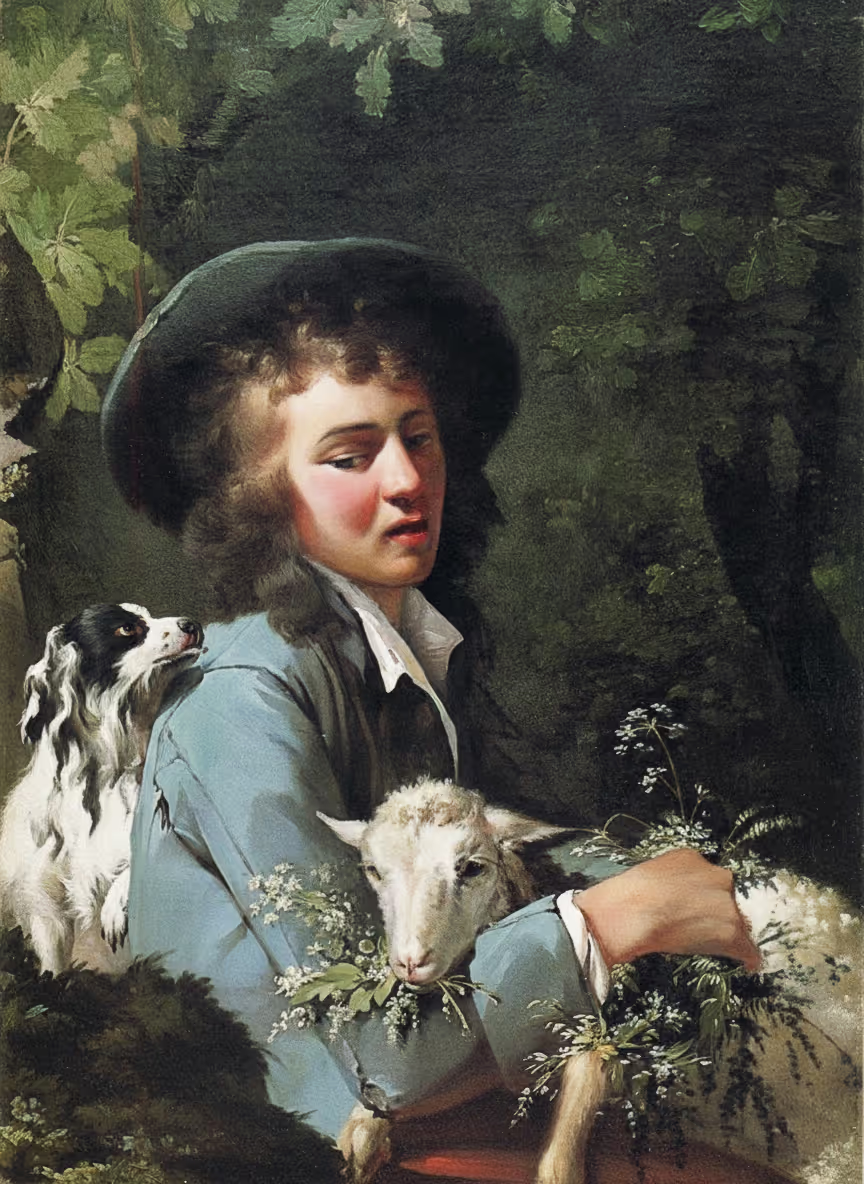
Pierre-Toussaint Dechazelle (1752-1833) Self-portrait circa 1780
The partnership between manufacturer and designer
The art of design in service of weaving
In the 18th century, Lyon's silk houses relied on a close
collaboration between manufacturers and designers, creating dual
company names that still reflect this heritage today. The manufacturer
owned the looms and organized production, while the designer created
the patterns and defined the house's style. This strategic alliance
ensured both commercial success and artistic identity. Prelle's
genealogy perfectly illustrates these successive partnerships. It was
within this tradition that Balthazar Eugène Prelle, born in Lyon in
1838, trained and became head of the design studio for over twenty
years, eventually giving his name to the manufacture.
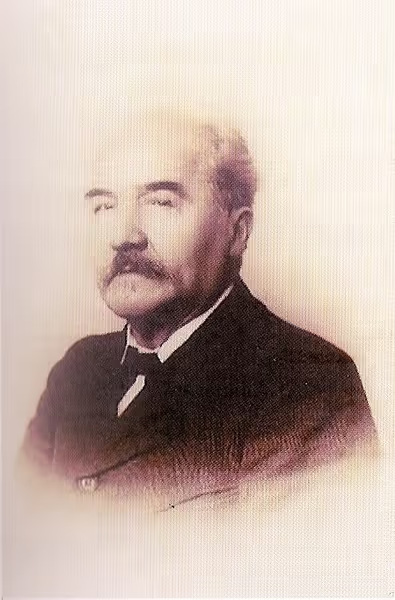
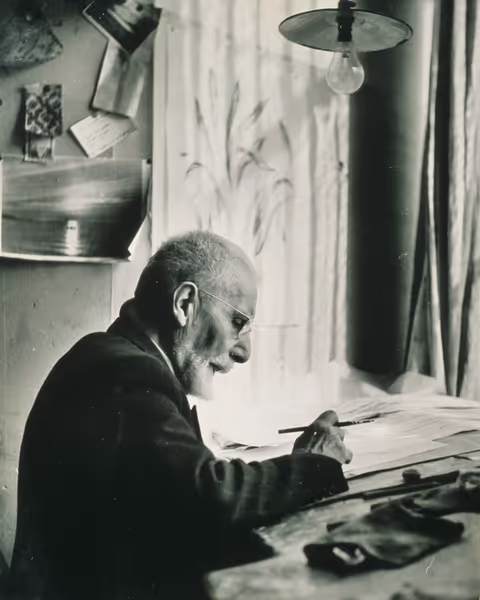
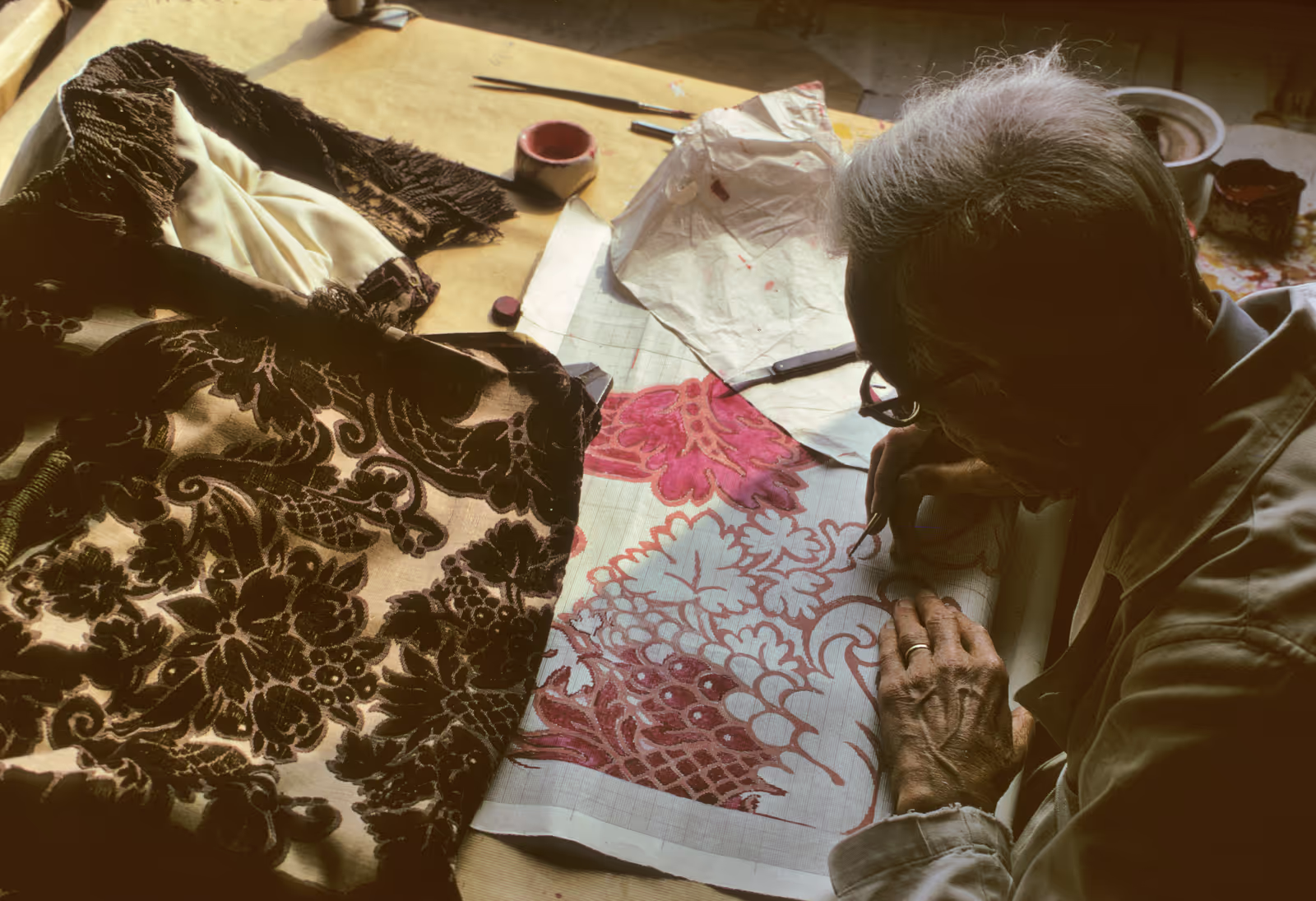
Balthazar Eugène Prelle (1838-1909) Head of the design studio at Lamy & GiraudAimé Prelle (1873-1959) Designer and company director, at his drawing table circa 1950
The Lyon fabrique system
The organization of collective expertise
Before 1880, Lyon's silk industry did not follow the industrial
factory model but operated as a fabrique, a unique economic and social
system that made Lyon prosperous. Merchant-manufacturers, true
entrepreneurs, did not own factories but coordinated a vast network of
canuts, master weavers who worked from home on their own looms. The
manufacturer supplied the silk thread and Jacquard cards bearing the
design, then collected the woven fabrics to sell them. This
decentralized system allowed great production flexibility and
transformed the slopes of Croix-Rousse into a working-class district,
where each building housed domestic workshops with high ceilings
required for Jacquard looms. The canuts formed a highly skilled
working class, keepers of exceptional technical expertise passed down
through generations. This organization lasted until the late 19th
century, when successive crises, industrial competition, and the
electrification of looms pushed some manufacturers to consolidate
production into modern factories. Only a centralized company could now
bear the cost of increasingly rapid technical innovations, marking the
transition from the fabrique system to the integrated mill.
The creation of the manufacture
Birth of a modern manufacture
In 1880, Antoine Lamy, who had acquired the fabrique in 1865 with
Auguste Giraud, made a decisive choice: to abandon production for
clothing, then called "la Robe," and focus exclusively on furnishing
fabrics. The following year, in 1881, he took a crucial step by
bringing the entire production process together in a modern factory at
7 rue Barodet, on the Croix-Rousse plateau, where the manufacture
still stands today. This industrial concentration marked the end of
the dispersed fabrique system. It was in this new setting that
Balthazar Eugène Prelle's talent flourished. Trained at Lyon's flower
painting school and appointed head of the design studio at Lamy &
Giraud, his exceptional talent was recognized with medals at the
Universal Exhibitions of 1873, 1878, and 1889. In 1894, emboldened by
this recognition, Eugène Prelle founded his own independent design
studio on rue Griffon, in the name of his two sons, Aimé and
Alexandre, both trained in textile design and the arts. The Prelle
brothers maintained excellent relations with Lamy & Giraud, supplying
most of their designs. Upon Édouard Lamy's death in 1917, Aimé Prelle
naturally took over the company's leadership, which then became Prelle
et Cie, permanently establishing the name that endures today.
Continuity
Nine generations dedicated to silk
Prelle's history was enriched by a decisive alliance in 1926, when
Thérèse Prelle, Aimé's daughter and a talented designer trained at the
Beaux-Arts in Lyon and later in Paris, married Charles Verzier. This
union brought together two Lyon silk dynasties: the Verziers already
counted six generations of manufacturers since François Verzier, who
became a master craftsman in 1760. Charles Verzier partnered with his
father-in-law and took charge of managing the company. Upon his death
in 1948, his sons Philippe and François took over the business at 18
and 20 years old, ensuring continuity through decades of
transformation in the textile industry. Since 1993, Guillaume Verzier,
François's son, has led the manufacture with his wife Hélène,
representing the eighth generation on the Verzier side and the fifth
on the Prelle side. Together, they have maintained tradition while
innovating technically, notably with the installation of new
electronic looms in 2020. In 2018, their daughter Sabine Verzier
joined the family venture, embodying the sixth Prelle generation and
the ninth Verzier generation. This uninterrupted transmission over
nearly three centuries makes Prelle unique in the French industrial
landscape: a family manufacture that continues to weave exclusively in
France, guardian of ancestral expertise and priceless archives, modern
by tradition.
The great figures in Prelle's history
Discover the personalities who shaped our manufacture over the
centuries.