- Delivery
- 2004
- Sector
- Institutional
- Location
- France
- Architect
- Alain-Charles Perrot
- Address
- Place de l'Opéra, 75009 Paris
The Paris Opera, Charles Garnier's architectural masterpiece inaugurated in 1875, holds a singular place in the history of Manufacture Prelle. Our connection to this monument dates back to its origins: it was Eugène Prelle, great-great-great-grandfather of Sabine Verzier, who today directs the manufacture alongside her father Guillaume, who created the original design for the Grand Foyer's brocatelles from sketches by Charles Garnier himself.
A ten-year investigation to trace the thread
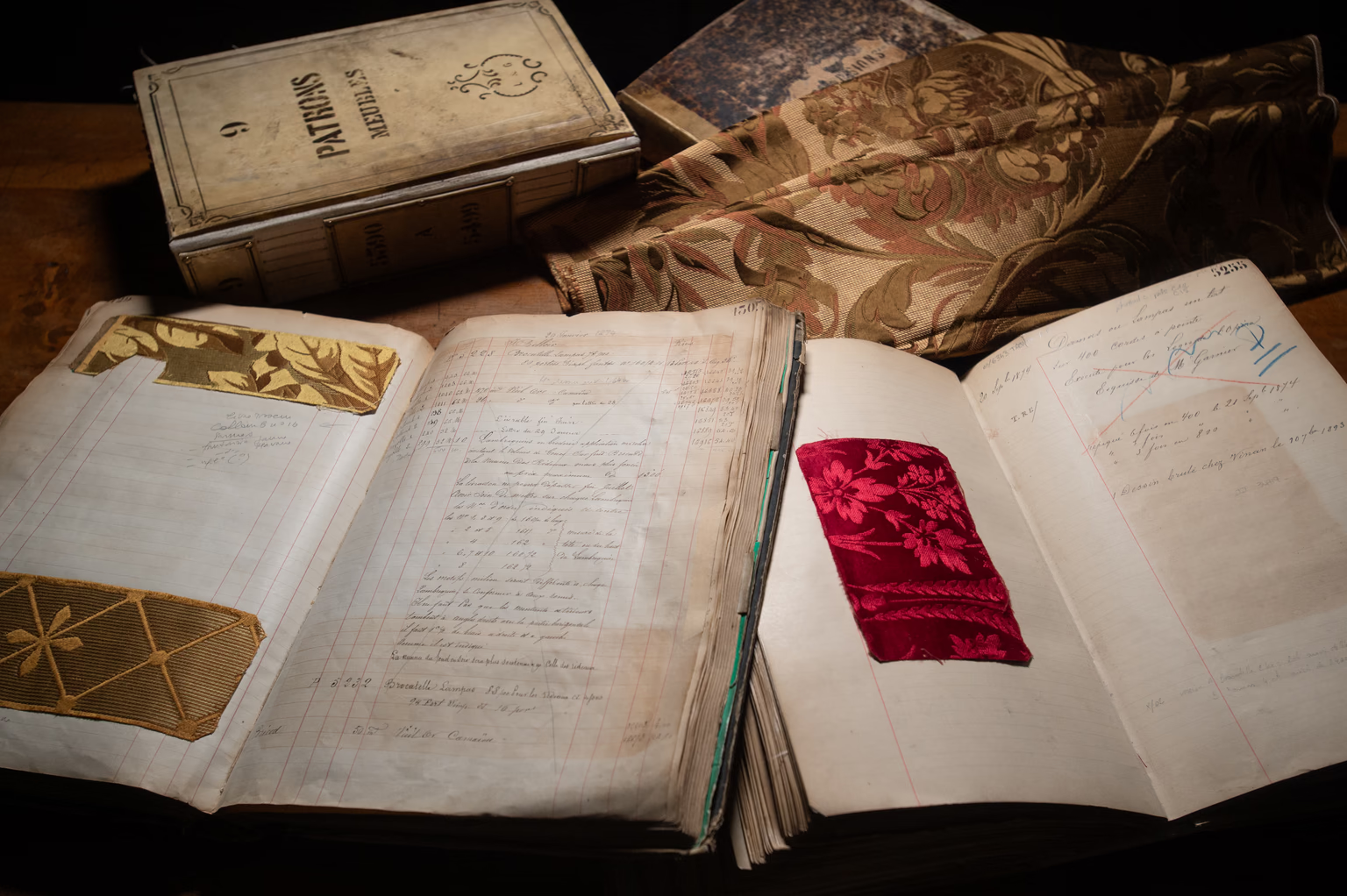
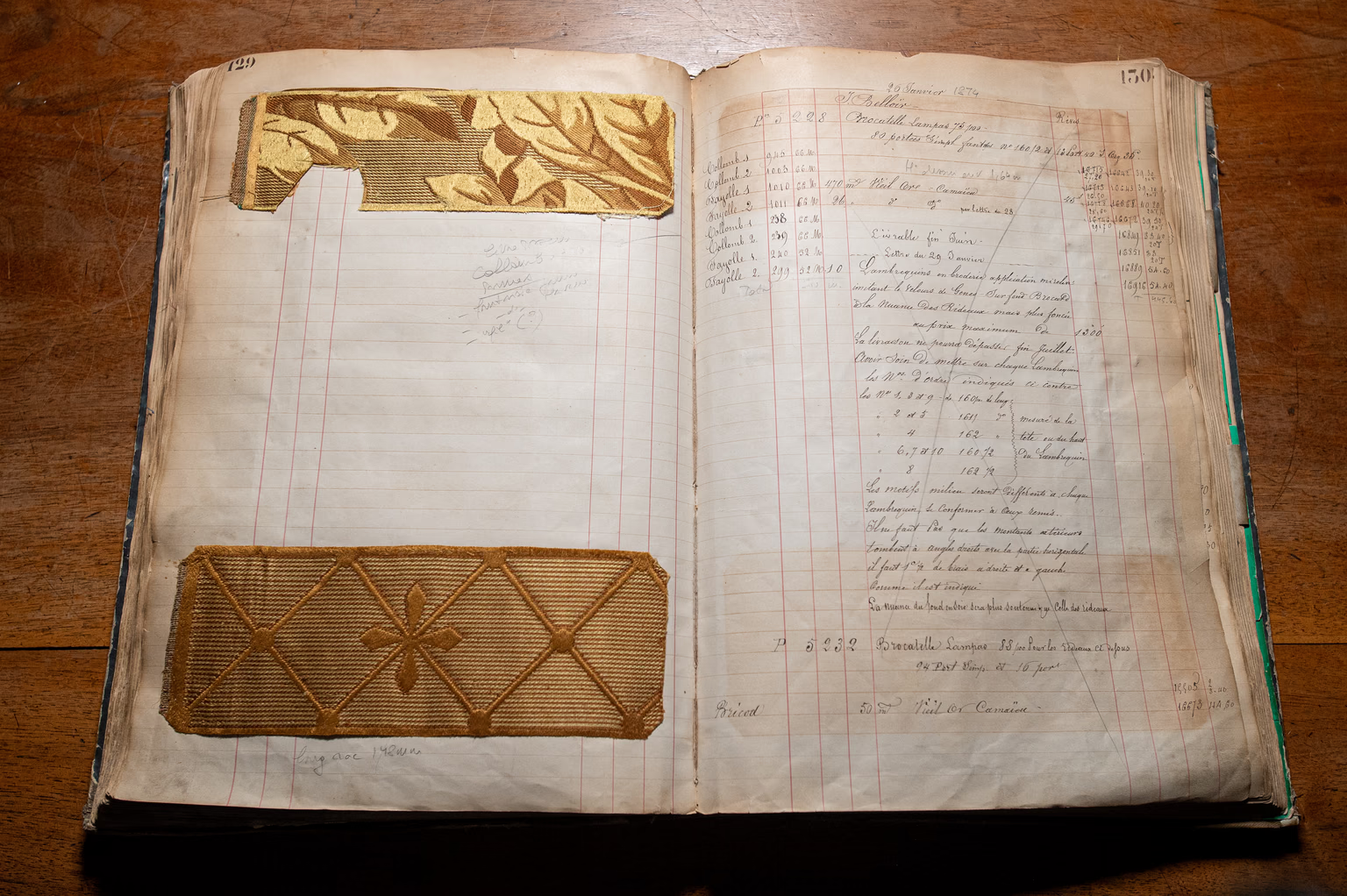
Historical research into the Grand Foyer’s textiles truly began in the early 1980s. It took a decade to understand that Charles Garnier had not ordered directly from Prelle: he had gone through Belloir et Vazelle, a nineteenth-century upholsterer, who had in turn entrusted the weaving to our house. This explains why the Opera held no direct record of a Prelle commission, and why our own order books listed not the Opera, but Belloir et Vazelle.
Once this indirect link was re-established, the original design, Eugène Prelle’s adaptation of Charles Garnier’s sketches approved in 1874, could be identified, along with its period colourings and the precise yardages ordered. Other drawings were also found in our archives (lambrequins, fabrics for the public boxes), which helped the teams of Alain-Charles Perrot, chief architect of the Monuments Historiques, to reconstruct the original décors.
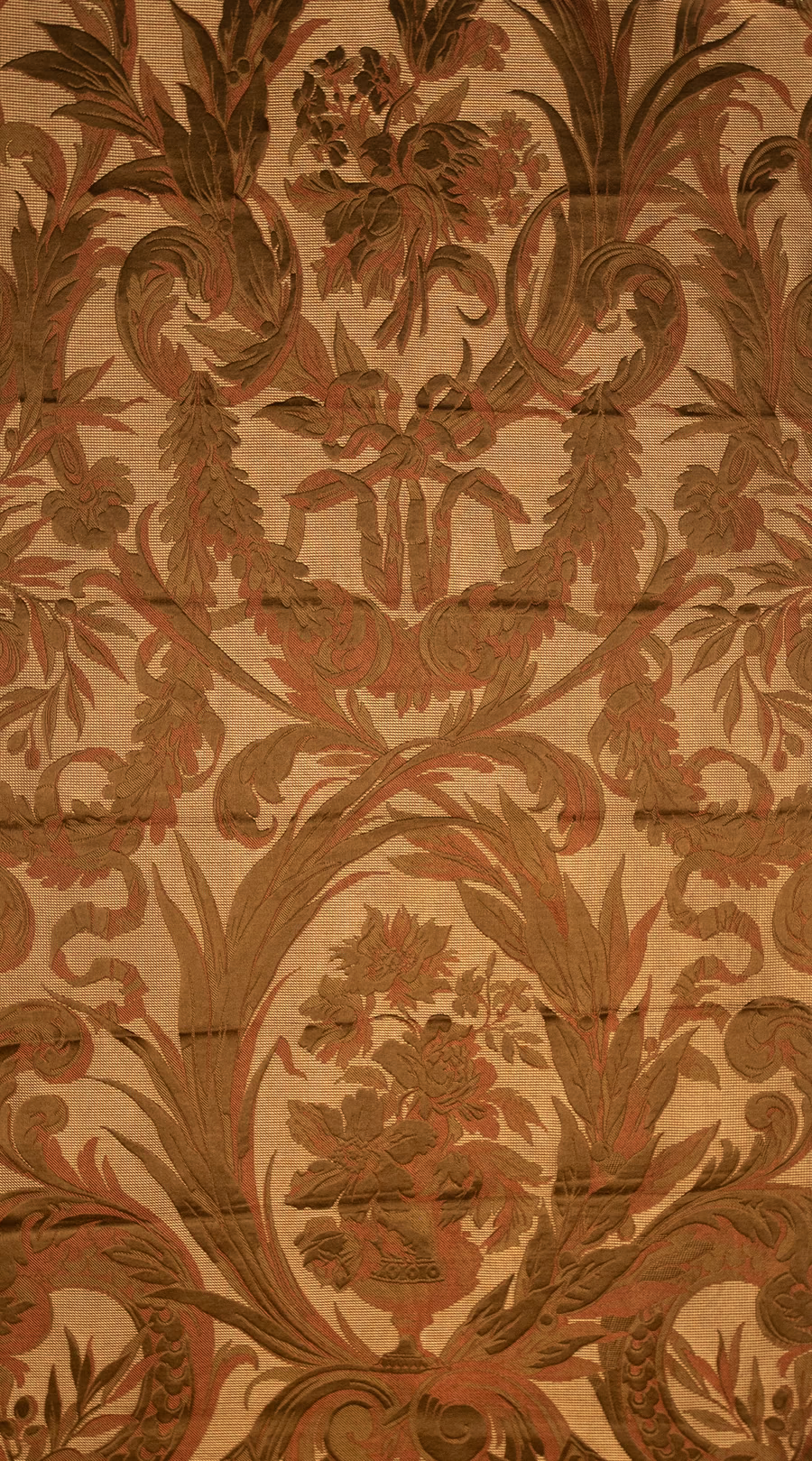
On this occasion, earlier drawings were discovered in the same vein as the “Garnier” brocatelle. One may logically assume these are proposals by Eugène Prelle that were not retained for the Opera. One of these brocatelles, known as “Eugène Prelle” (ref. P5441), was in fact selected in the late 2000s by the decorator Graf for the Vinci project on Rue Balzac.
The Grand Foyer: 670 metres of brocatelle restored
The restoration of the Grand Foyer hangings, carried out in 2004 under the direction of Alain-Charles Perrot, stands as one of the most spectacular projects ever entrusted to our manufacture. This great vessel of a room, 54 metres long, 13 metres wide and 18 metres high, had lost its original décors in a fire in 1921.
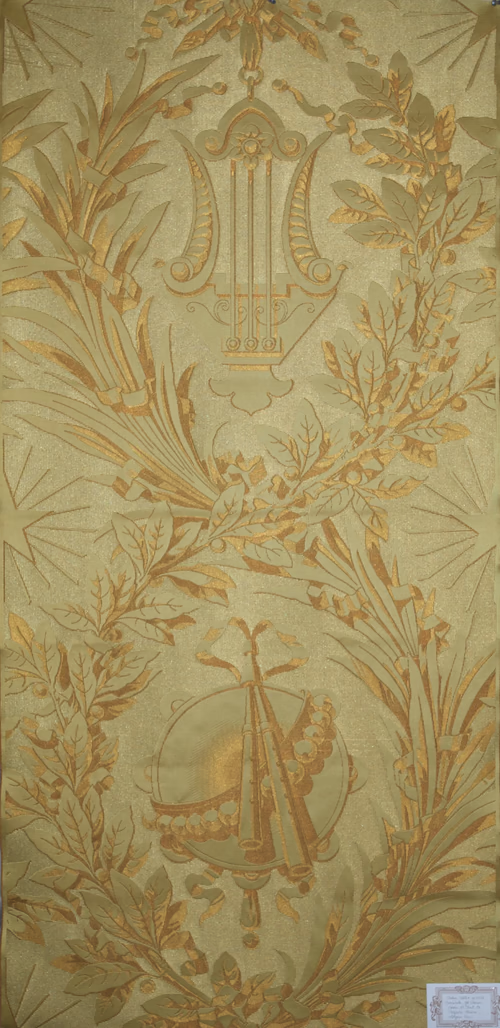
The full repeat of the brocatelle (ref. P5228) designed by Eugène Prelle: lyre, tambourine and foliage in a musical register characteristic of Garnier's work.
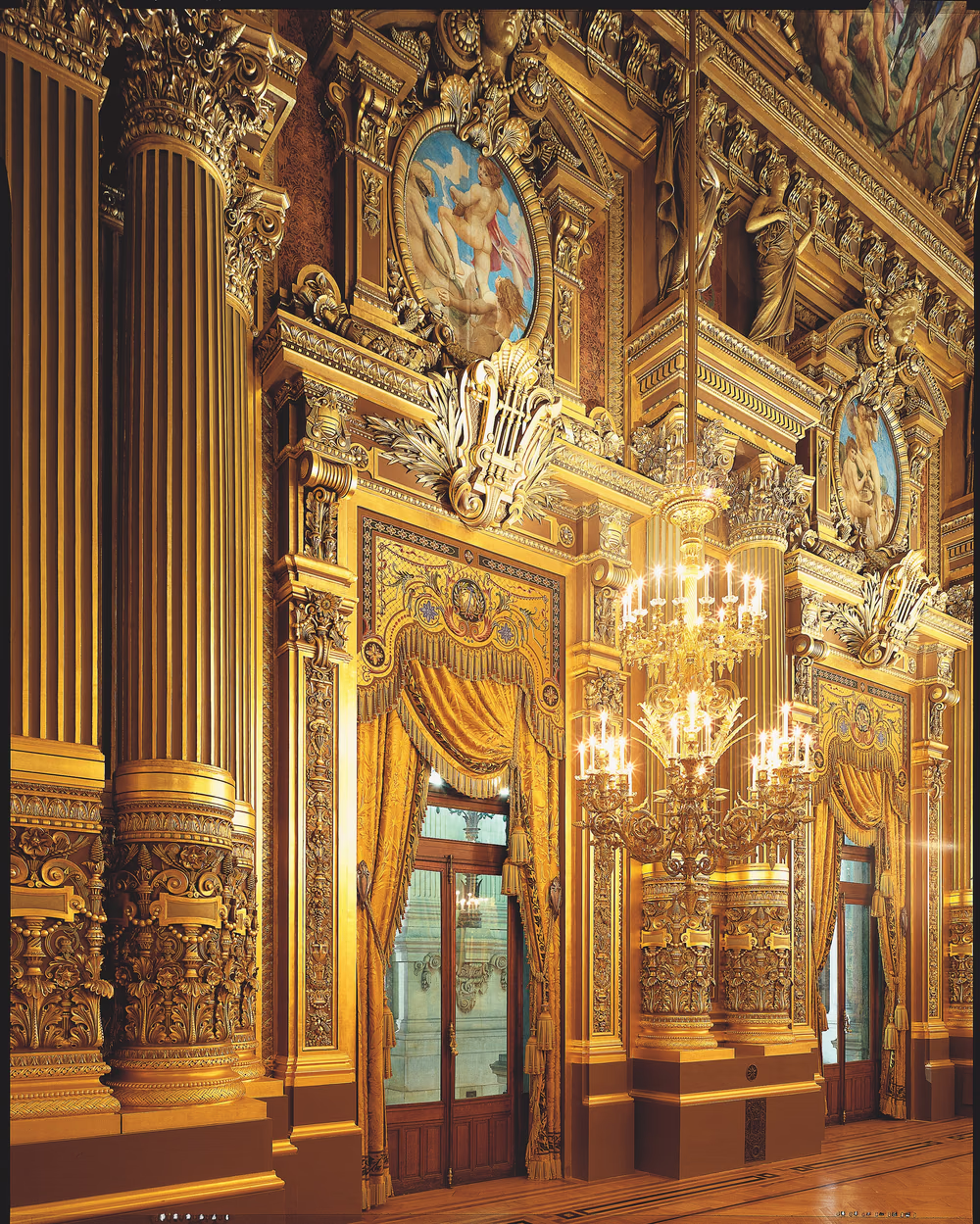
The restoration project spanned approximately twenty-five to thirty years in total. The estimates and negotiation phase for the fabrics alone took five to ten years, making it one of our longest-running commissions.
This brocatelle was of grand scale, featuring musical instrument motifs. Compared to other creations of the period (the chiseled velvet for the Marquise de Païva on the Champs-Élysées, for example), it appeared magnificent yet restrained. In the nineteenth century, these brocatelles were woven on hand looms in silk and linen. Today’s fire safety standards require reproduction in flame-retardant polyester thread (Trevira CS).
The Grand Foyer curtains
For the design itself (ref. P5228), woven for the Grand Foyer, the pattern repeat measures 72 cm. At the time, we still had a shuttle loom 75 cm wide, which made it possible to weave the Trevira at the original width.
Initially, the tender specified execution in silk and linen with post-treatment flame retardancy, for want of suitable polyester threads. Over the three to four years of preparation and quotation studies, the Prelle Manufacture finally identified the missing thread (chenille or ondé Trevira), which allowed the project to switch to an entirely Trevira execution. Some threads required for the final reproduction were eventually sourced in Japan.
Given the very tight deadlines, a night shift was set up and the workshop operated round the clock for six to eight months to complete the order. Our manufacture thus wove 670 metres of brocatelle, supplemented by 620 linear metres for the curtains, 190 metres of damask (ref. P9472) and 190 metres of imberline, as well as chenille borders (ref. P9465) and lambrequins (ref. P9474).
- of brocatelle woven for the Grand Foyer
- 733yd
- linear for the curtains
- 678yd
- for each curtain
- 132lb
- of workmanship per curtain
- 700h
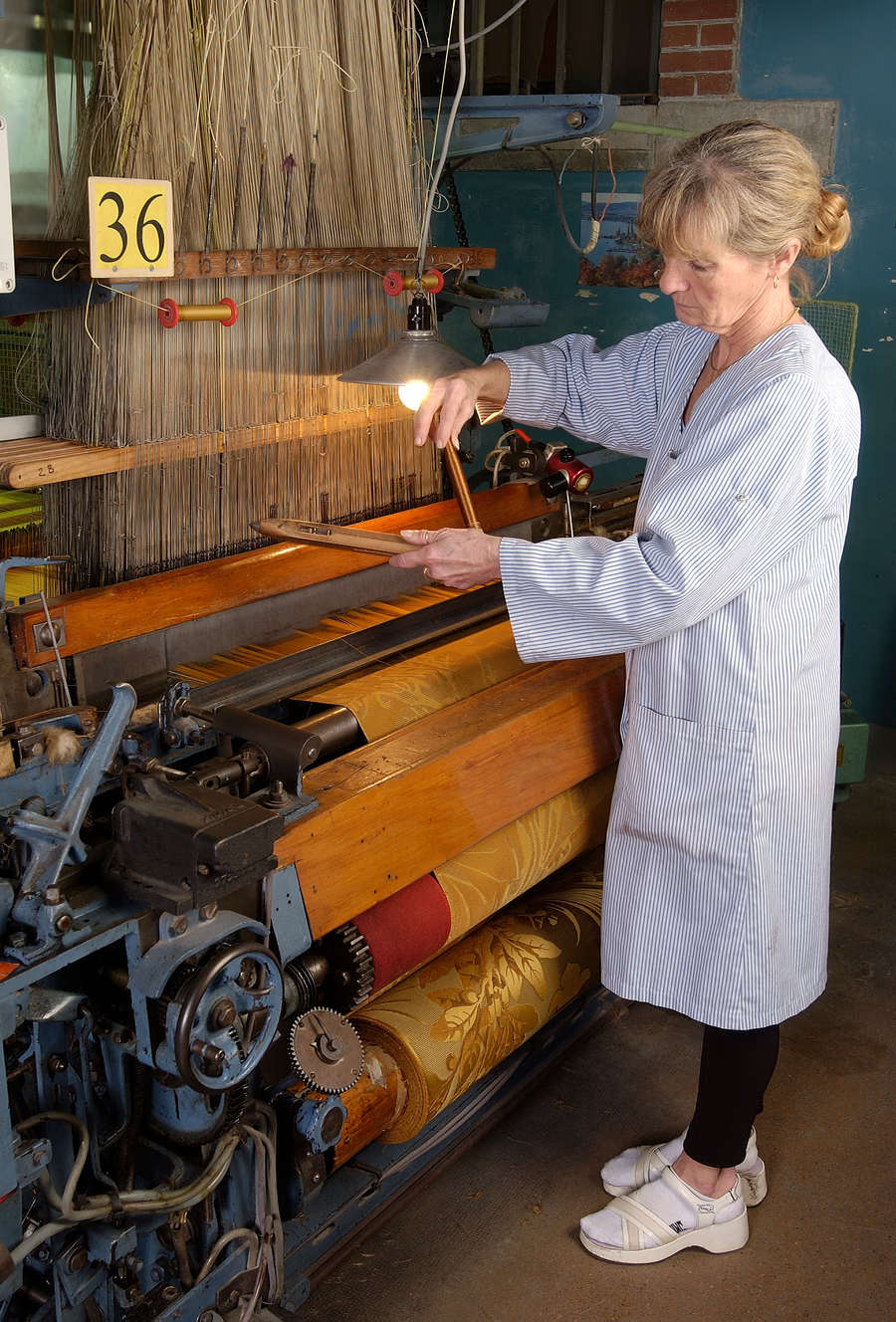
The making-up of these complex “Italian-style” décors demanded cutting and assembly of such subtlety that it had to remain invisible to the naked eye. Each curtain weighed 60 kilograms and represented 700 hours of workmanship. Installation in the Grand Foyer was carried out in May 2004 by the Jouffre workshops.
The lambrequins: recreating Garnier’s vision
We did not have all the known medallions. Historically, only one medallion was documented by an engraving and a watercolour; the other four or five, out of five or six in total, had to be reconstructed.
An entire day was spent on the scaffolding with a member of the Perrot team, who revealed the full decorative register of the Grand Foyer and then the rest of the Opera, in order to absorb Garnier’s vision and guide work on the medallions. Ten identical medallions were unthinkable, as were ten entirely different medallions for five pairs of windows. With Jean-François Romieux, five or six sketches were produced in a musical register, in the manner of the original. The approach approved by Alain-Charles Perrot was for five pairs of facing medallions, one per window. Four new medallions thus joined the one from the watercolour.
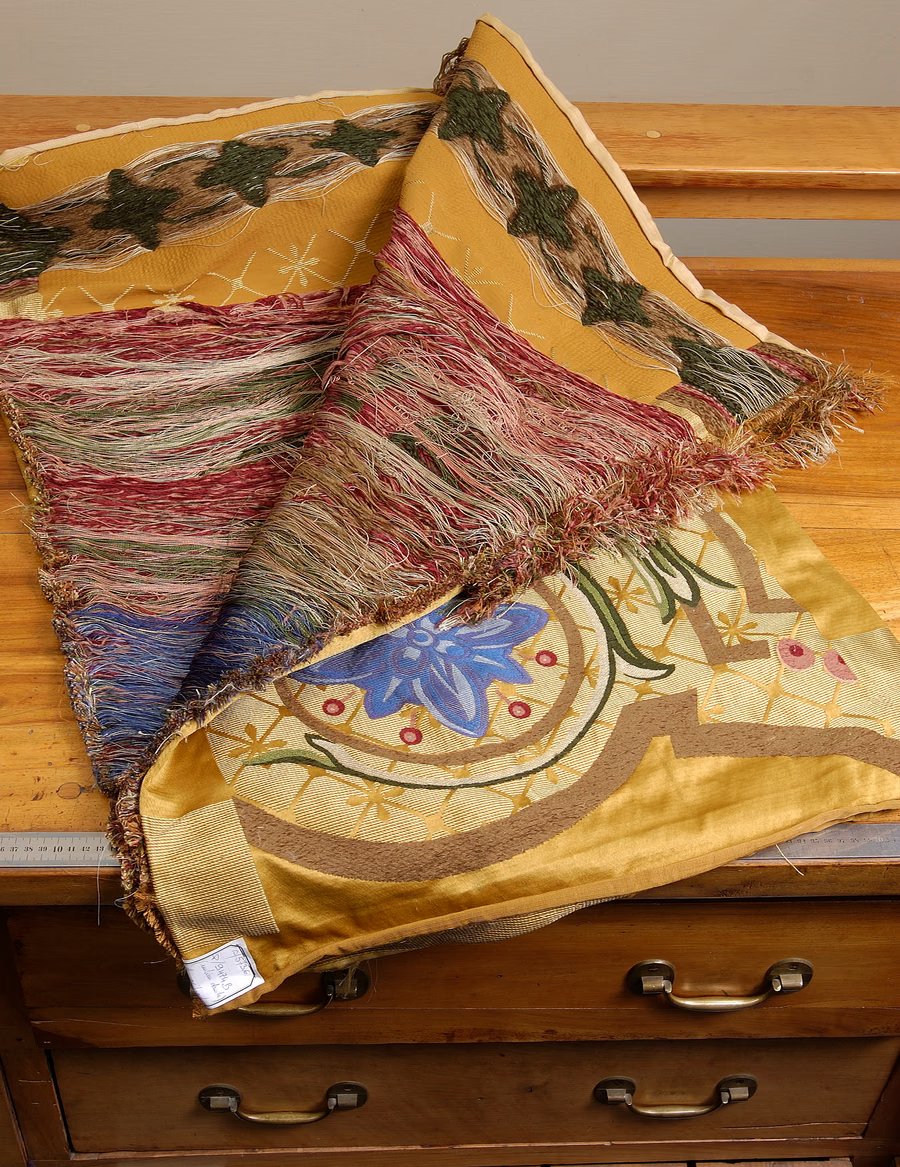
Weaving was carried out in-house. The 162 cm (63.78”) loom did not yet exist: only the 65 cm was available, meaning two 67 cm widths had to be joined. Each lambrequin was therefore woven in five pieces (five widths per pelmet, the odd number dictated by the central medallion), then assembled. The borders were woven in one piece with the rest, and the five sections were then joined. The fabric combines polyester weft, chenille wefts and an ondé, making it, then as now, a highly technical exercise, even if some of its complexities are imperceptible from the floor.
The boxes and the Emperor’s box
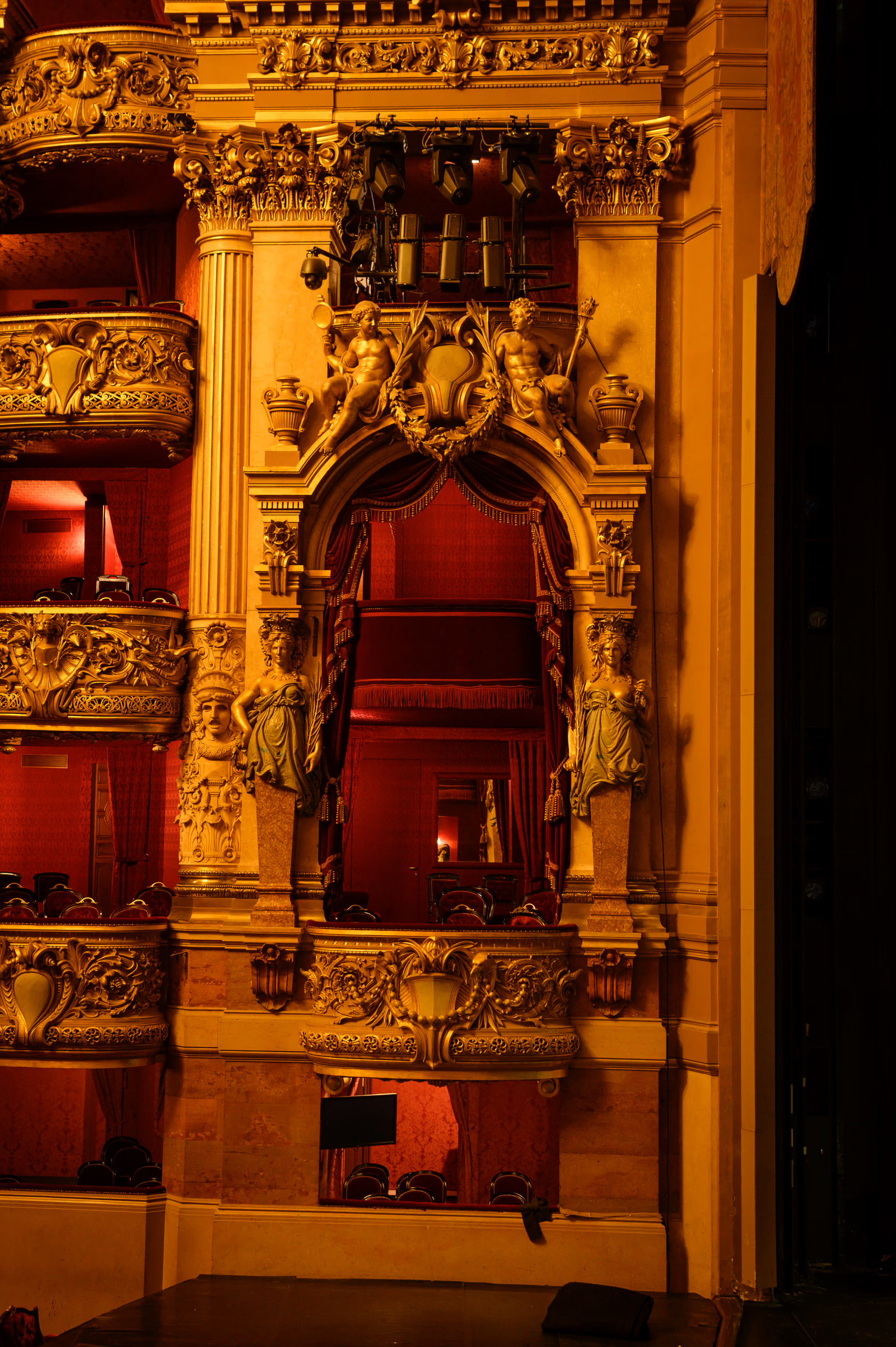
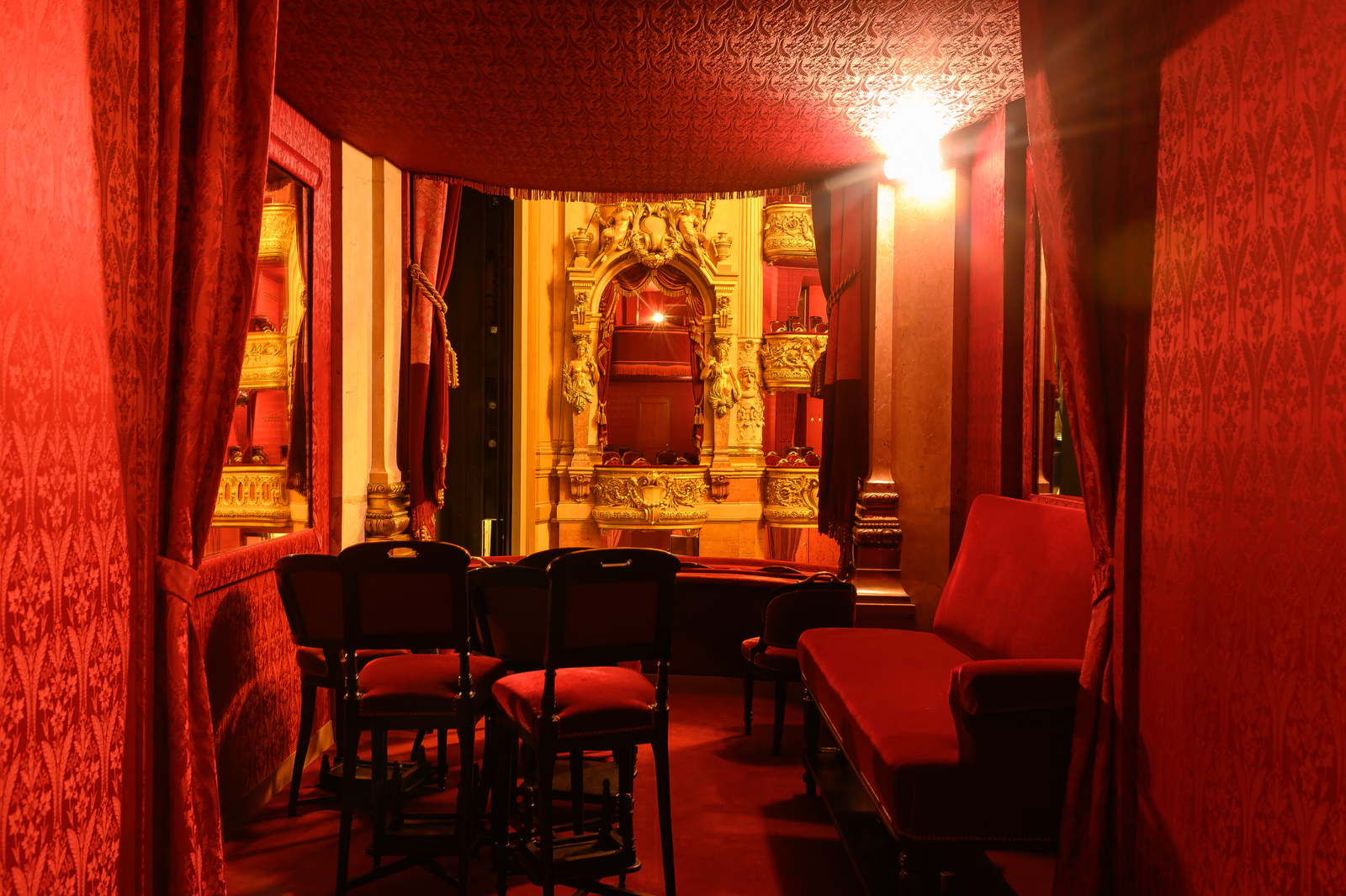
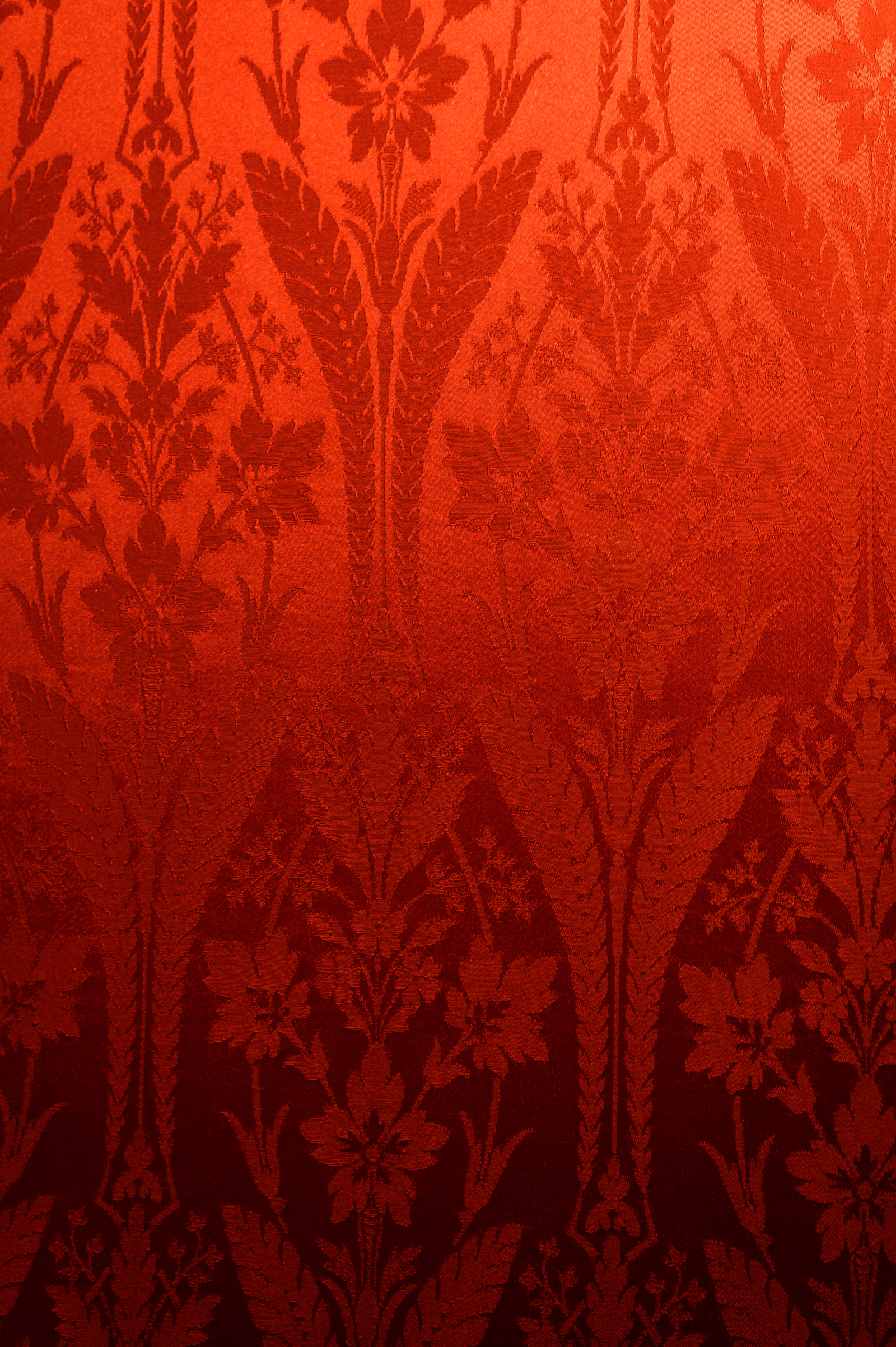
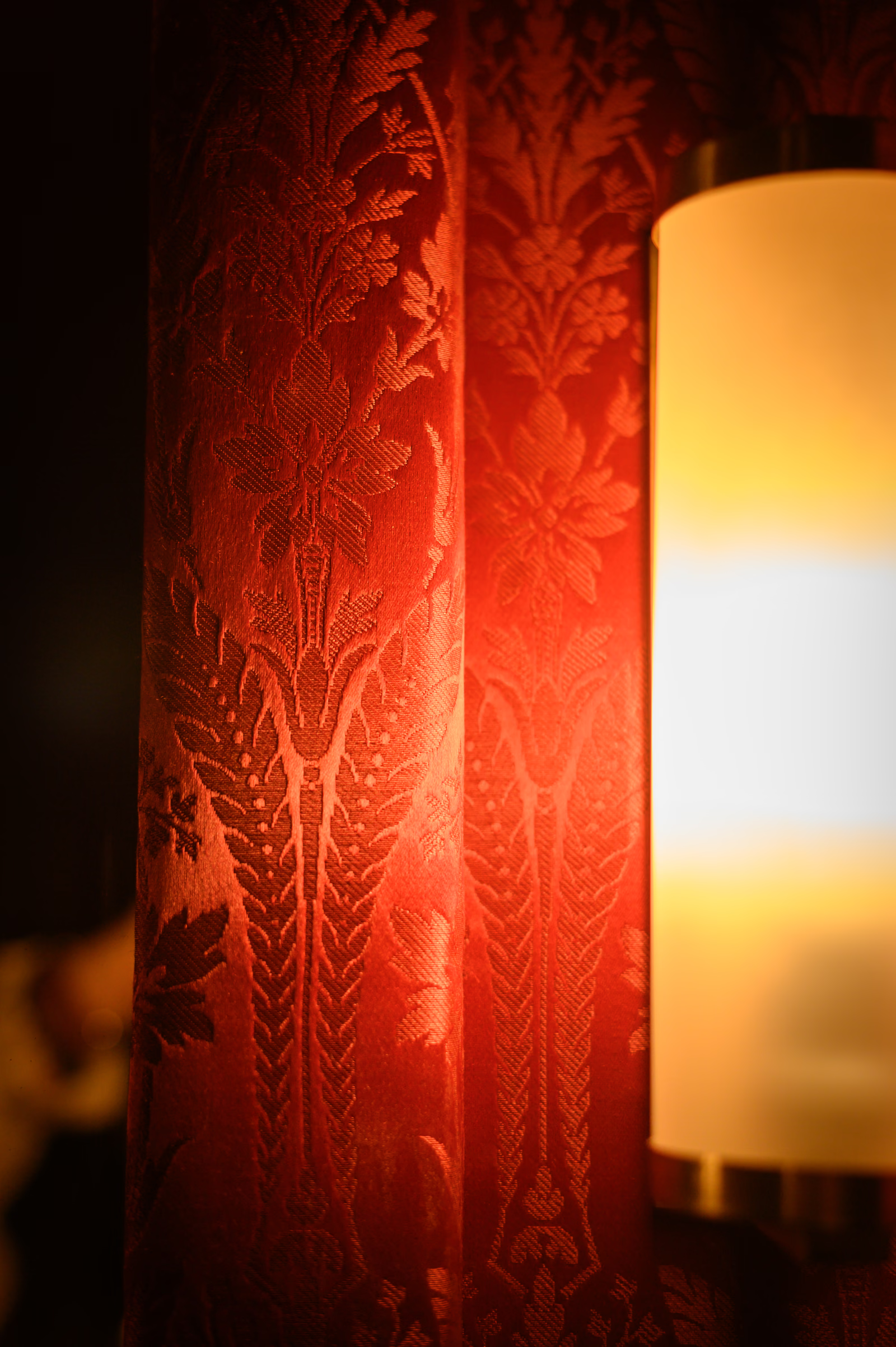
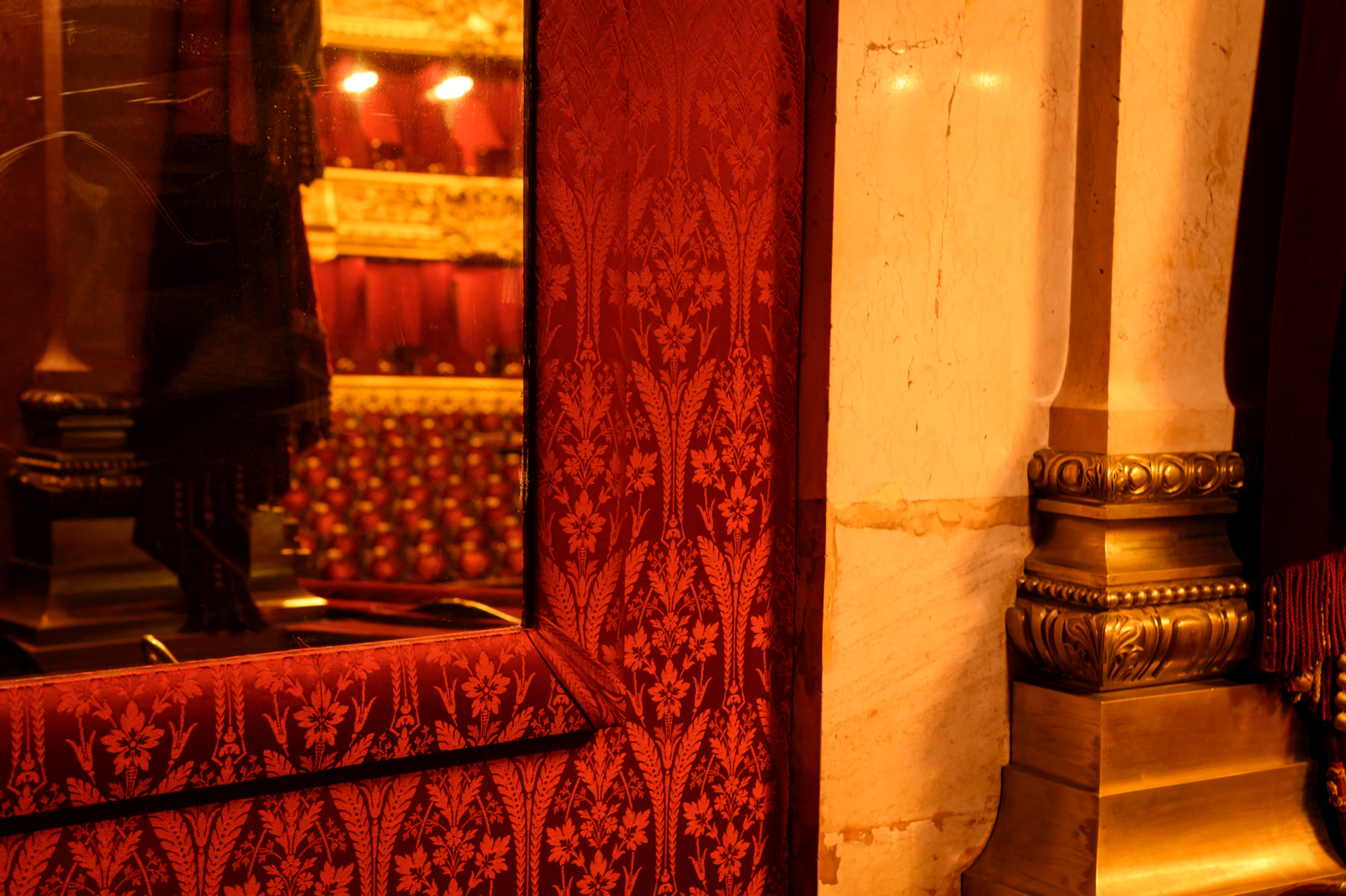
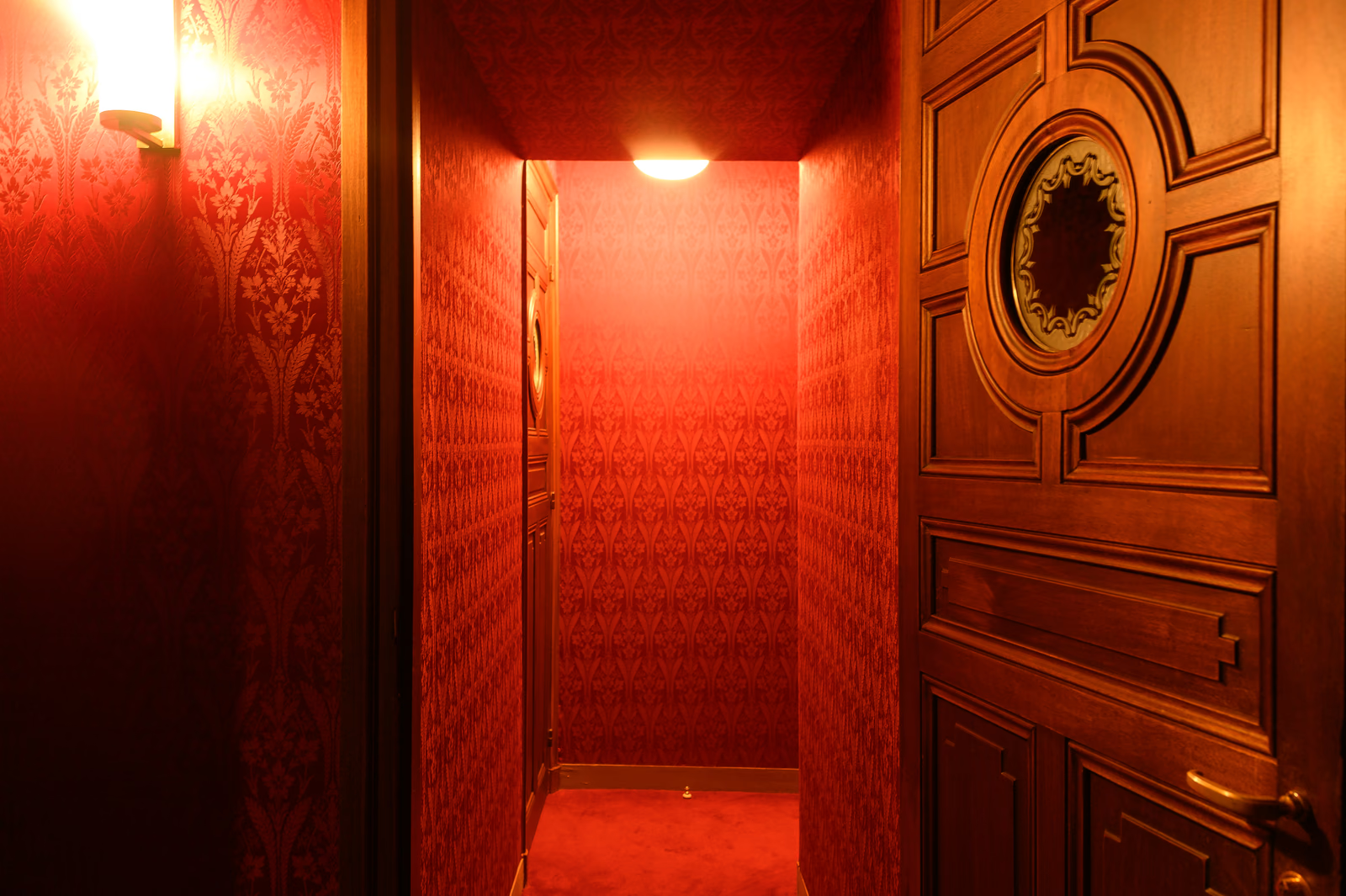
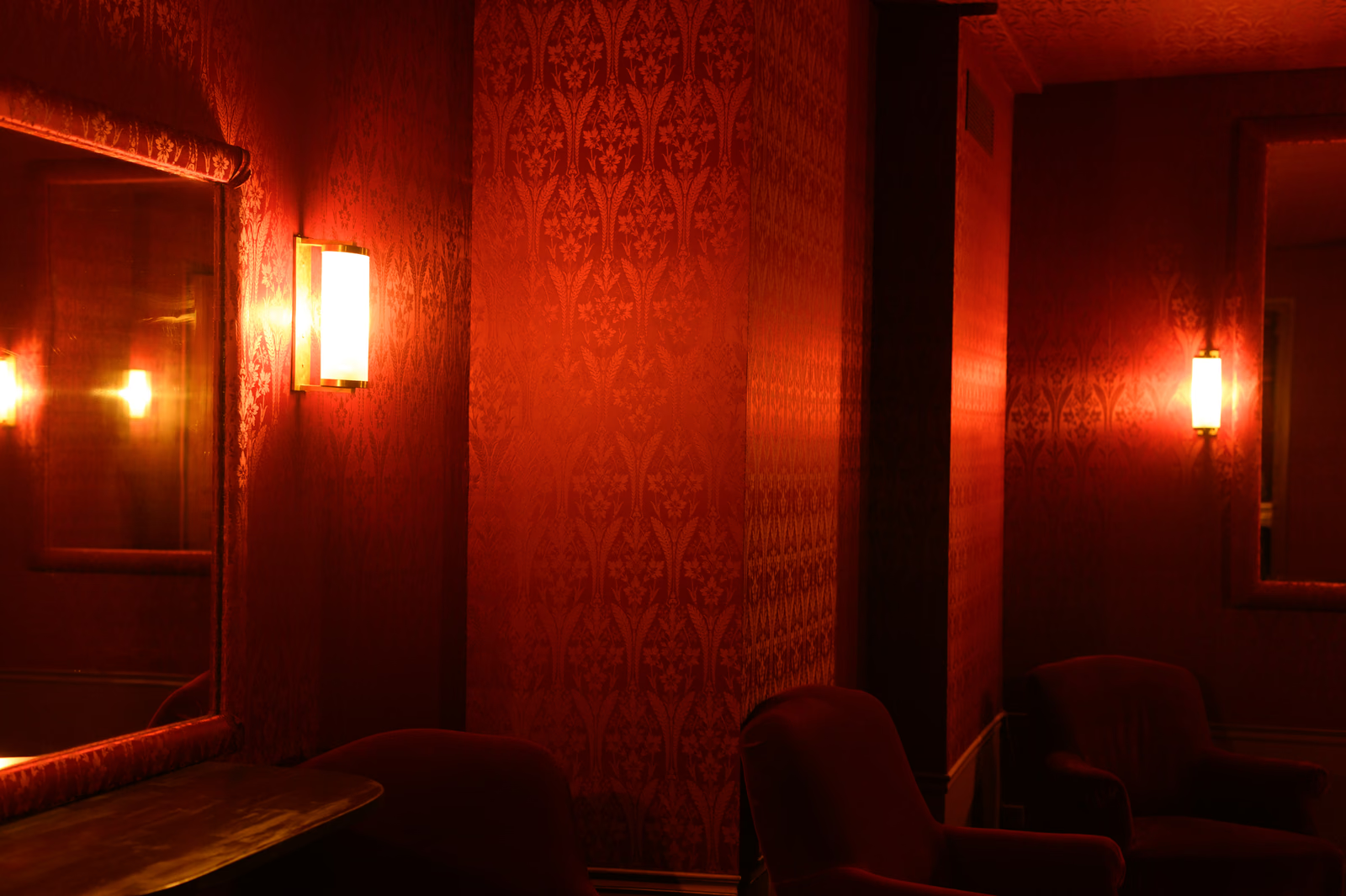
Since 2004, Manufacture Prelle has supplied the crimson damask (ref. P5255) that dresses the auditorium boxes, rewoven over successive restoration campaigns from 2004 to 2023. A brocatelle design with lattice pattern and imberlines (ref. P5232) was rewoven for the benches.
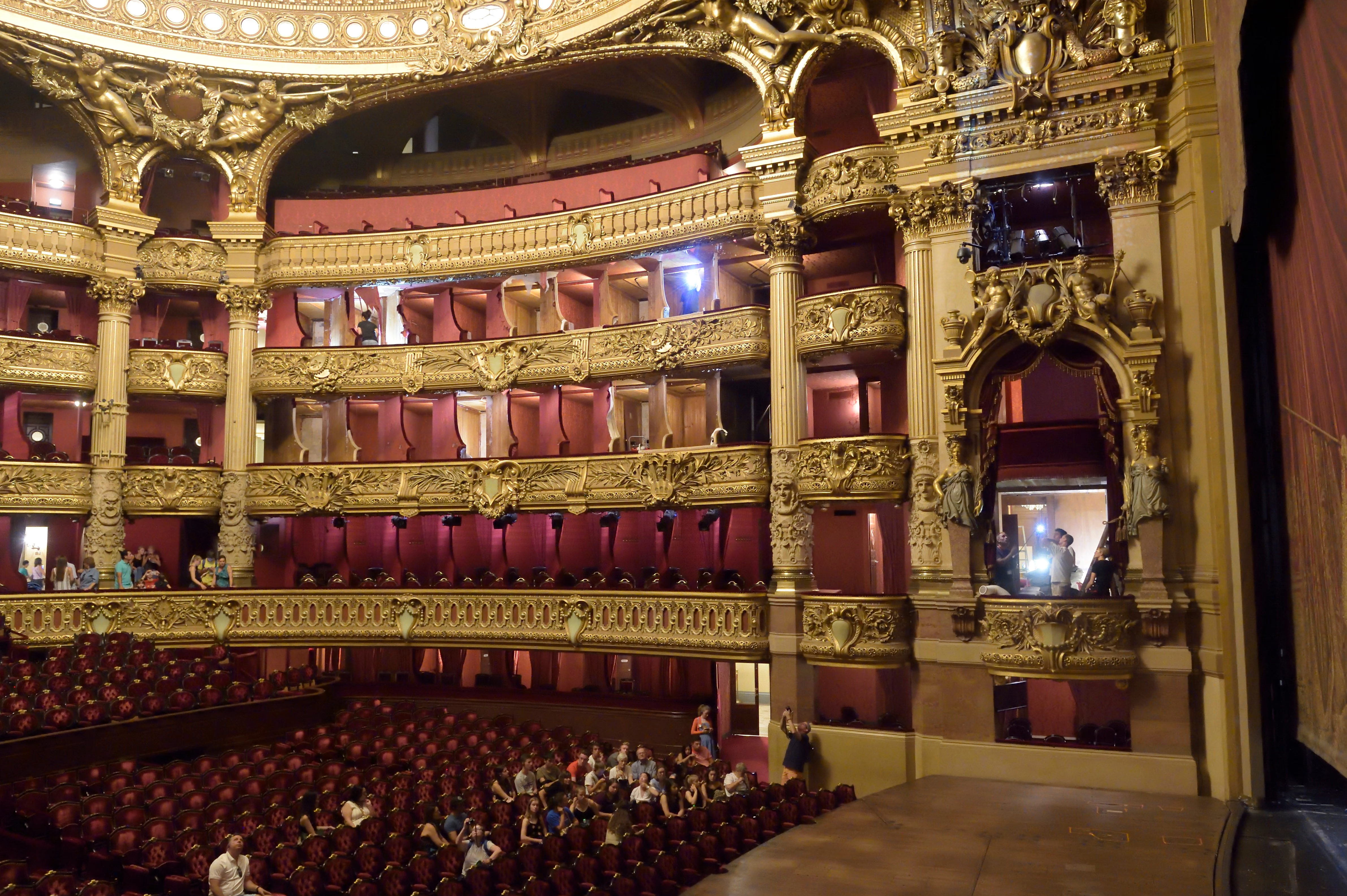
The imperial boxes dossier was conducted with Pascal Prunet, chief architect of the Monuments Historiques, and is now overseen by Laurence Lobry Lajunias, heritage architect.
One point of discussion was the question: why a brocatelle rather than a damask? In Guillaume Verzier’s view, judging by the yardages woven at the time, damask had been used in the ordinary boxes, and brocatelle for the imperial boxes. The quantities matched. From a decorative standpoint, his hypothesis was that Garnier had wished for harmony of design and colour throughout the auditorium, while distinguishing the imperial boxes with a finer quality of fabric.
The restoration of the Imperial Box during the summer of 2019 saw this box recover its splendour thanks to a red silk brocatelle (ref. P5255) woven in our Lyon workshops, alongside the MDB workshops and the upholsterer Phelippeau.
A few months later, in September 2019, during the restoration of the boxes, a small strip of original fabric was discovered beneath a corner of a door in the Empress’s box. It was taken out so that Prelle could carry out a technical analysis. At last, proof was in hand that Garnier had indeed wanted brocatelles for the imperial boxes: it was a fragment of our nineteenth-century production.
Another unexpected discovery: while stripping the Empress’s box, the teams uncovered a small water closet intended for Her Majesty, forgotten behind a hanging for more than a century.
The Opera has thus recovered, box by box, the textile coherence intended by its creators. A work of long perseverance that bears witness to the enduring bond between Manufacture Prelle and the Palais Garnier.