- Delivery
- 2023
- Sector
- Institutional
- Location
- United States
- Architect
- Annabelle Selldorf
- Address
- 1 E 70th St, New York, NY 10021
When Henry Clay Frick had his Fifth Avenue residence built in New York in 1914, he entrusted the decoration of the reception rooms to Sir Charles Allom, founder of the London firm White, Allom & Co. It was through him that the fabrics destined to dress the walls of the residence were ordered from Manufacture Prelle. More than a century later, it is to our manufacture that the Frick Collection turned once again for the renovation of its iconic spaces.
A residence designed for art
The Frick residence, designed by the architect Thomas Hastings in the French neoclassical style, was conceived from the outset to house its owner’s collection. “We desire a comfortable, well arranged home, simple, in good taste, and not ostentatious,” wrote Frick to his decorator in December 1913. Sir Charles Allom, whose London workshops produced panelling and stucco, orchestrated the ground-floor spaces while Elsie de Wolfe furnished the private apartments upstairs.
This residence was part of a broader movement. During the Gilded Age, many American industrialists had sumptuous residences built in European taste, calling upon renowned English and French decorators: Jules Allard, Jansen, Lucien Alavoine, Carlhian, Hoentschel, Pregaldini. These names, found from the United States to Latin America, also appear in our commission books.
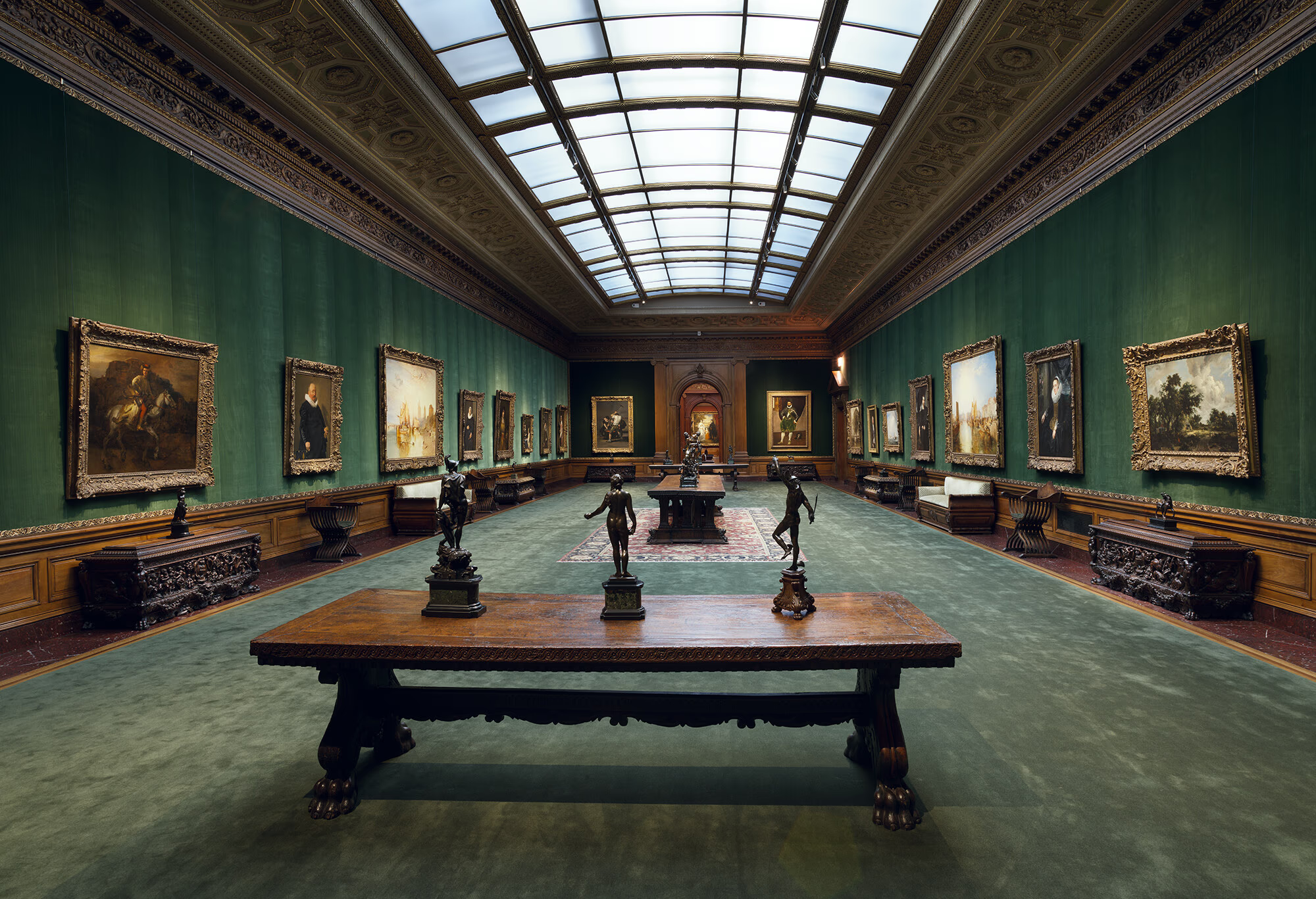
The West Gallery, a long gallery lit by a zenithal skylight, was conceived as the heart of the collection: a space where Rembrandt, Vermeer, Turner and Constable converse in an atmosphere of domestic intimacy. Upon Frick’s death in 1919, the residence was transformed into a museum according to the terms of his will. It opened to the public in 1935 and has since preserved the spirit of an exceptional private collection.
Tracing the thread through the archives
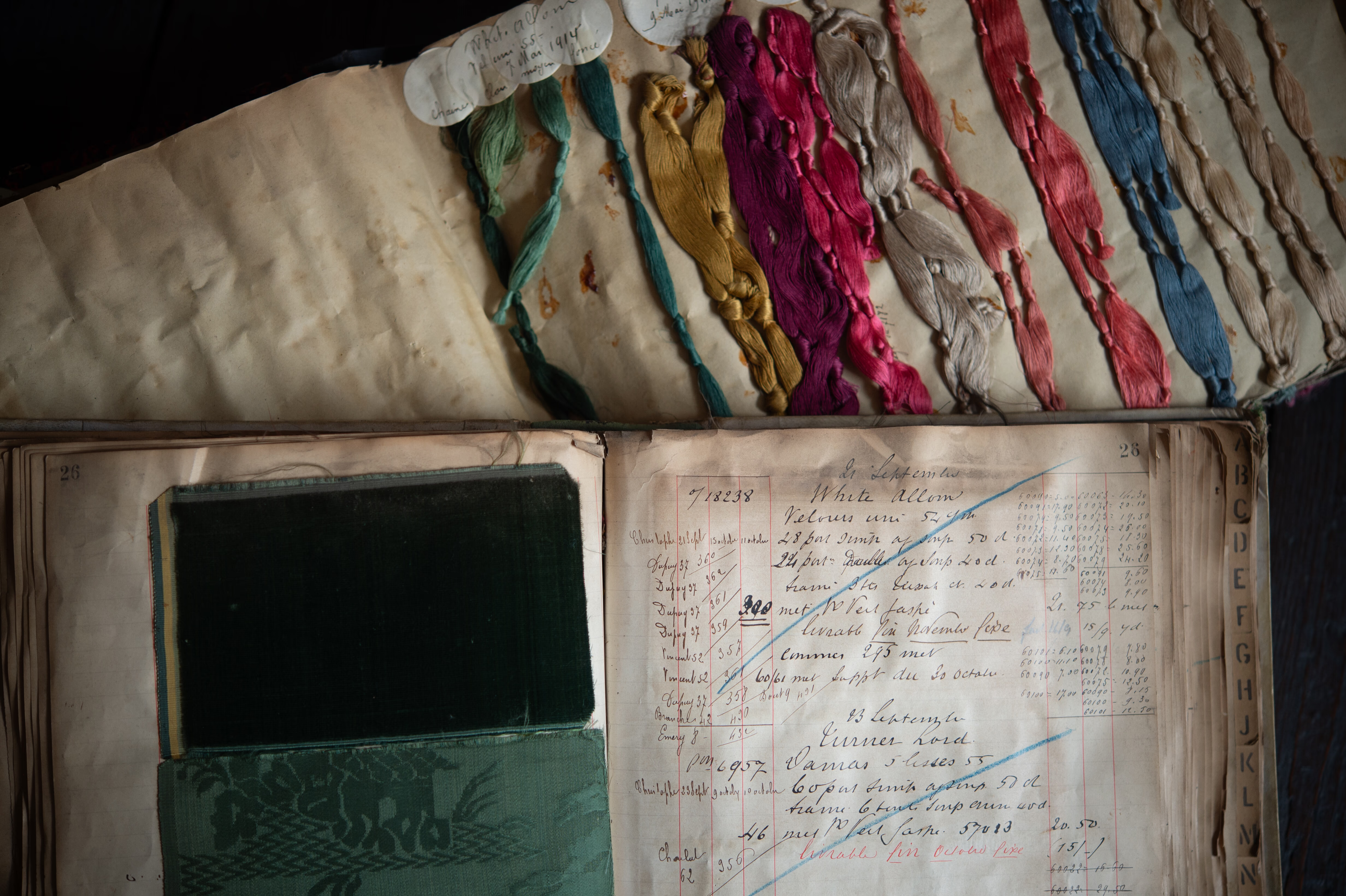
The name Henry Clay Frick appears nowhere in the commission books of our manufacture. This absence is explained by the standard practice of the decoration trade: orders were placed through the decorator, not the final client. It was by identifying the orders from White, Allom & Co. in our archives, then cross-referencing them with the order histories and photographs held by the Frick Collection, that the connection could be established with certainty.
An order in 1914 notably mentions a green velours strié of 632 metres in 54 cm width, as well as a velours ciselé (ref. P7120) of 125 metres in bronze, blue and otter. This same velours ciselé was ordered again in 1969 by the Frick Collection, thereby confirming the origin of the original fabrics.
The West Gallery: a velvet rewoven identically
As part of the extensive renovation programme entrusted to the architect Annabelle Selldorf, the West Gallery underwent a complete restoration completed in 2023. The decision to entrust this commission once again to the original manufacturer was not self-evident: it required that the manufacture still exist, that it had preserved its archives, and that it be capable of reproducing a fabric according to early twentieth-century techniques.
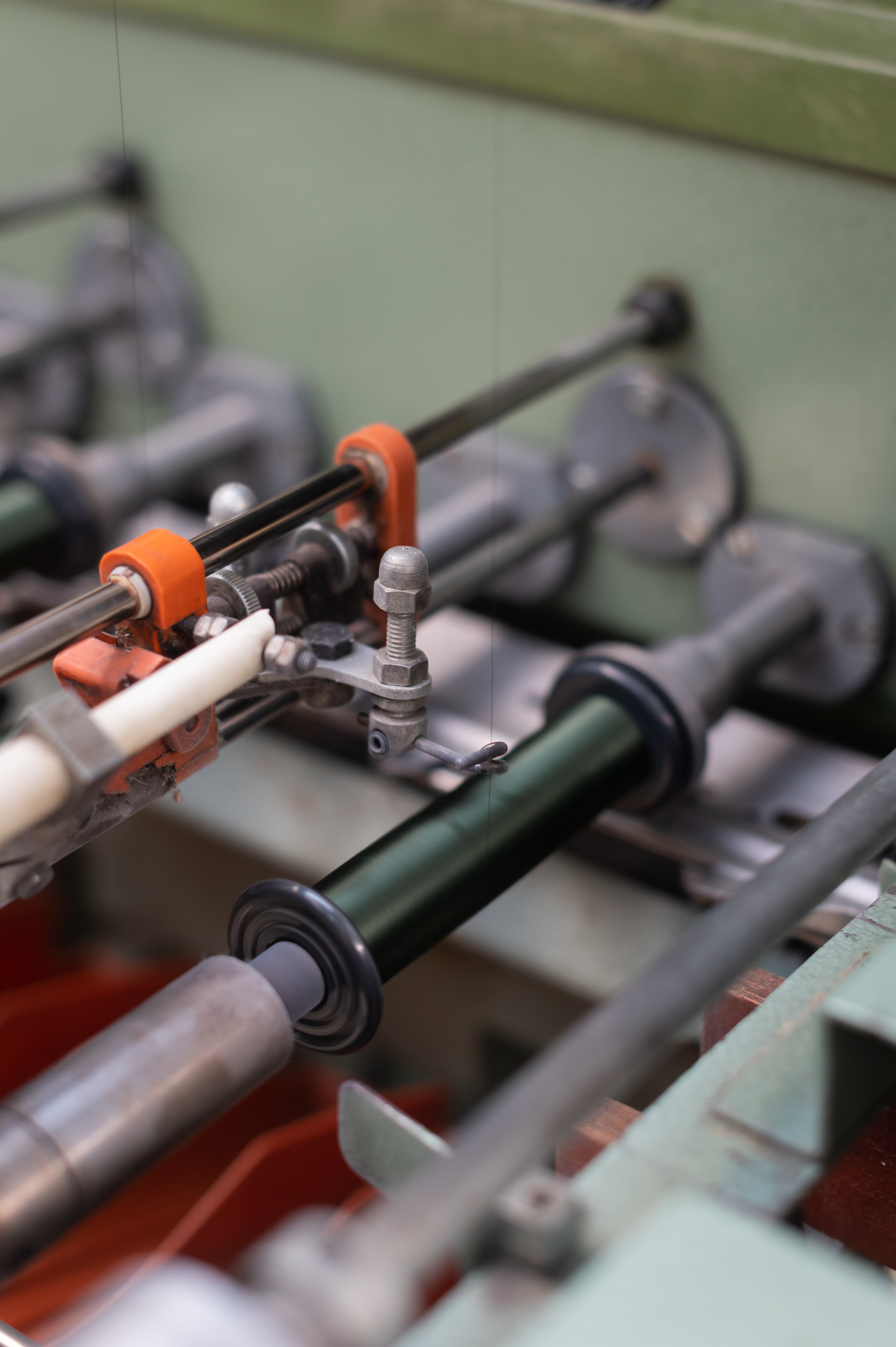
Sabine Verzier, who today directs the manufacture alongside her father Guillaume, together representing the sixth and ninth generations of the family at its helm, supervised the reproduction of the green velours strié (ref. P226) that has distinguished this space since its creation. Our team rewove this velvet using the same types of silk thread employed a century ago, drawing on the samples and thread swatches preserved in our archives to restore the exact shade.
For a velours strié, this requires rediscovering the precise arrangement of the warp threads, which alternate in a determined order between a light green, a medium green and a dark green. Trials were conducted in our hand-loom workshop until the exact proportion and order were achieved that restored the original hue.
The figures convey the scale of this project: more than one hundred kilograms of organsin silk—the finest quality of silk obtained by double-twisting raw threads—were required to dress the walls of the West Gallery alone. A specific lot was purchased and tested, entirely dedicated to this project, in order to guarantee consistent quality, dye batch and production across the hundreds of metres woven. In total, our manufacture delivered more than a thousand metres of fabric, all woven in our Croix-Rousse workshops. This deep green, chosen originally so as not to compete with the tonalities of the paintings, offers a rich, luminous ground that enhances the canvases without overwhelming them.
The Oval Room: a full-width damas
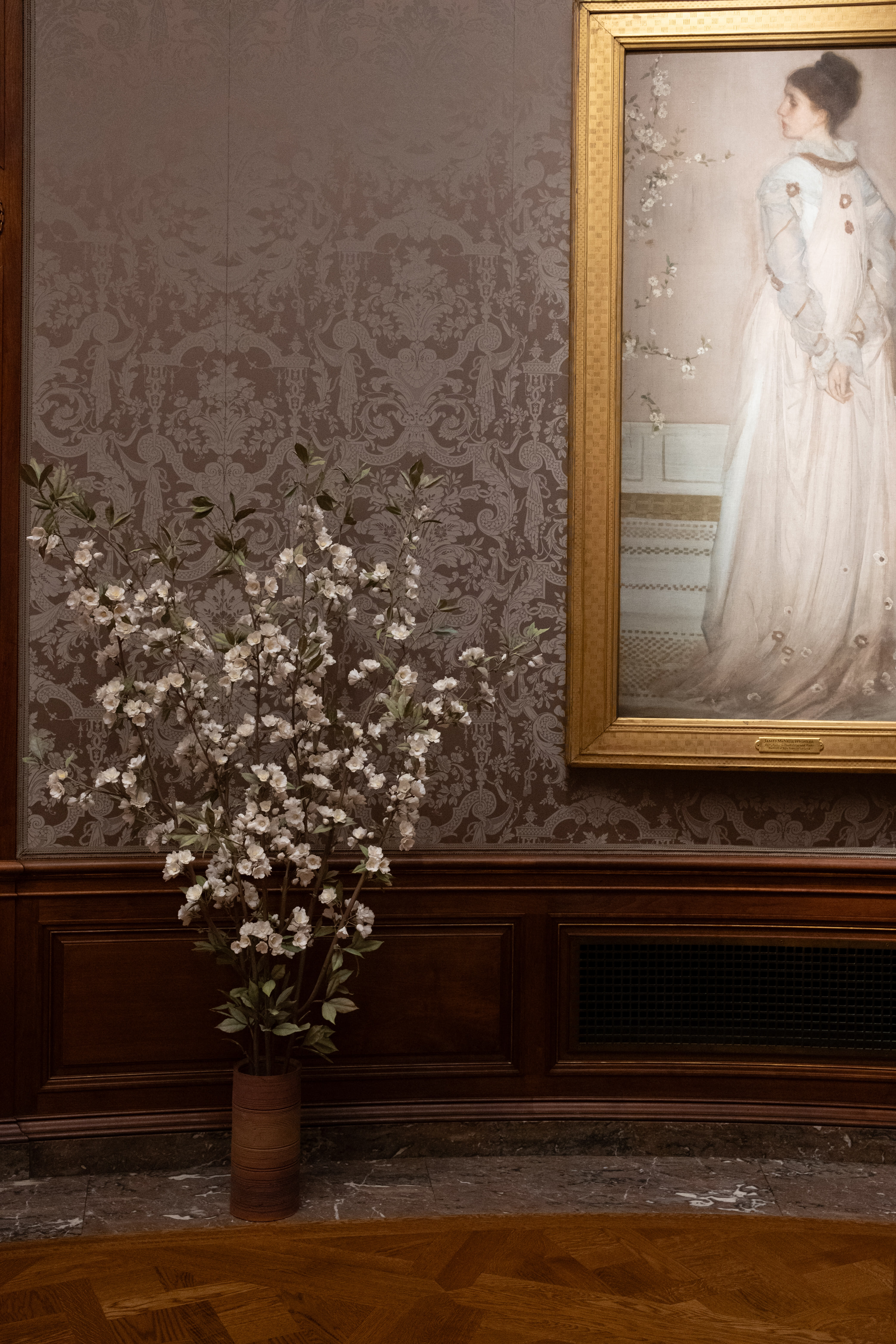
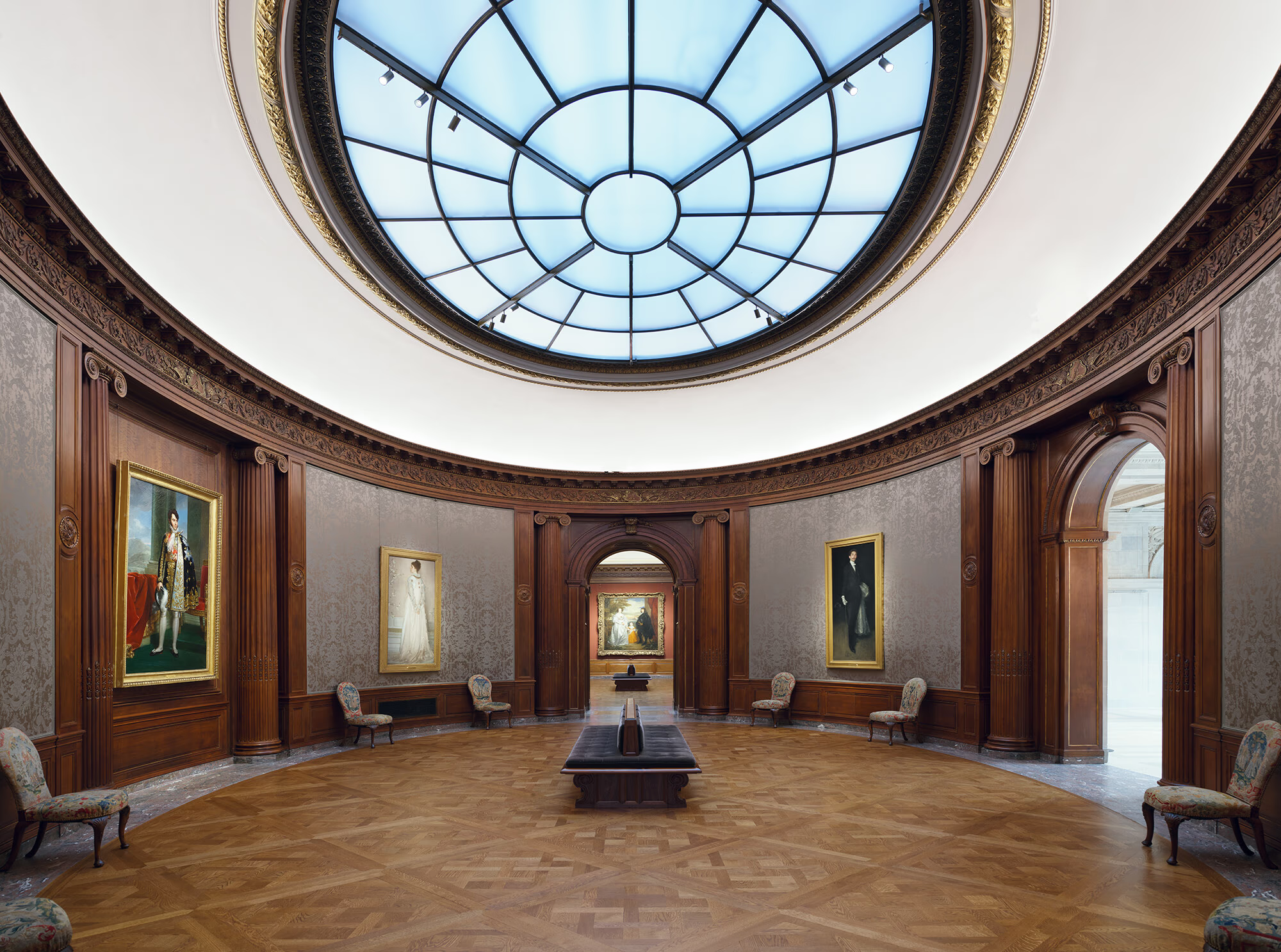
Beyond the West Gallery, the reopening of the Frick Collection in 2025 revealed other interventions by our manufacture. Mr. Frick’s study was re-hung with a taffetas 15/16 (ref. P296) accompanied by a brocatelle (ref. P9740). But it is the silk damas of the Oval Room (ref. P9741) that best illustrates the technical capabilities of our workshop.
To respect the original design, this damas had to be woven at 162 cm wide, an unusual dimension that allows the pattern to be presented without repeat or seam. This feat is made possible by our Dornier loom with full-width Stäubli jacquard mechanism, specifically designed and prototyped by our manufacture. Each thread is controlled individually, with no repeat constraint across the width, making it possible to produce traditional 54 cm fabrics repeated three times as well as single-piece decorative panels.
The density of this damas reaches 300 threads per pouce lyonnais, or approximately 111 threads per centimetre. The pouce lyonnais (2.707 cm), a historical unit of measurement in silk weaving, remains in use in our trade to express the fineness of a weave. Applied to the full width of the fabric, this represents more than 18,000 warp threads. Maintaining such regularity across this width, with silk threads of extreme fineness, constitutes a technical feat particular to Lyon silk weaving.
More than five decades of collaboration
The relationship between Prelle and the Frick long predates this major renovation. As early as 1967, our manufacture had supplied a velours ciselé 2 corps (ref. P7120), supplemented in 1969 by an amethyst velours ciselé (ref. P8426). In 2001, a lampas 4 lats fond faille (ref. P9402) was woven for the Fragonard Room, the gallery housing the celebrated panels painted by Fragonard for Madame du Barry. A plain light crimson silk velvet (ref. P229) followed in 2014 for the same space. The silk velvet of the East Gallery was likewise entrusted to the manufacture.
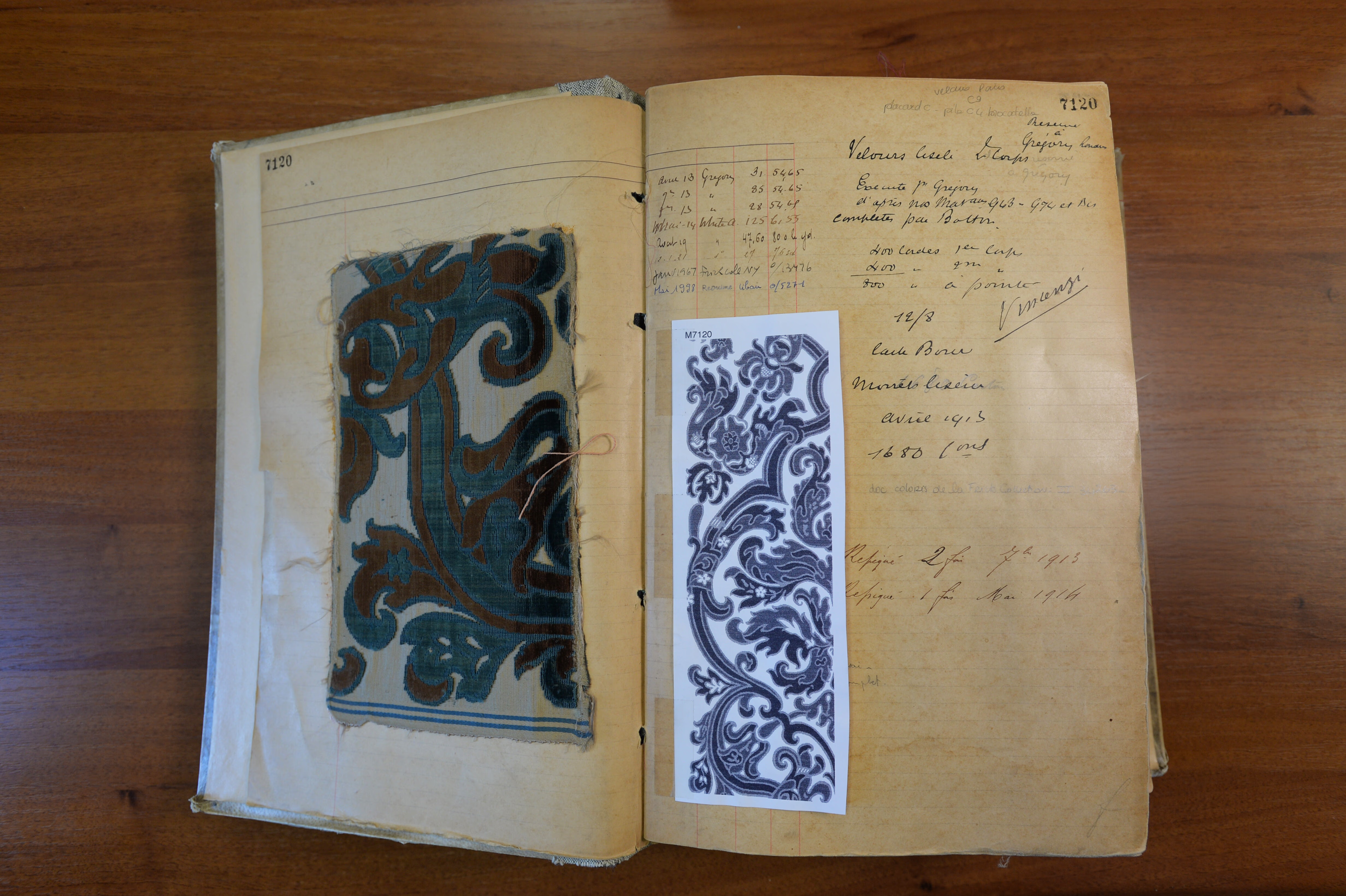
The velours ciselé 2 corps (ref. P7120) from the Prelle archives, with its original pattern drawing.
It is this intimate knowledge of the residence and its textile needs, accumulated over more than five decades, that naturally led the institution to entrust us with the restoration of its most iconic spaces.
Continuity as a method of restoration
The Frick Collection embodies an exemplary case of heritage restoration in which the continuity of the manufacturer is not an incidental detail but an essential component of authenticity. By calling upon the same manufacture more than a century apart to reproduce a fabric it had itself created, the institution mobilised far more than a supplier: it called upon living archives, a technical memory transmitted from generation to generation, and expertise that cannot be improvised.
This approach produces visible results. Visitors to the Frick Collection today rediscover the atmosphere intended by Henry Clay Frick: a sober, refined setting in which the silks participate in the silent dialogue between the works and their surroundings. The quality of the fabrics delivered—their density, their lustre, their construction—is the fruit of an expertise that is passed on but cannot be replicated elsewhere: that of centuries of savoir-faire maintained at the heart of Lyon.